Moisture Detection
Moisture detection helps locate water migration behind finishes and beneath flooring so the drying plan covers the actual affected area.
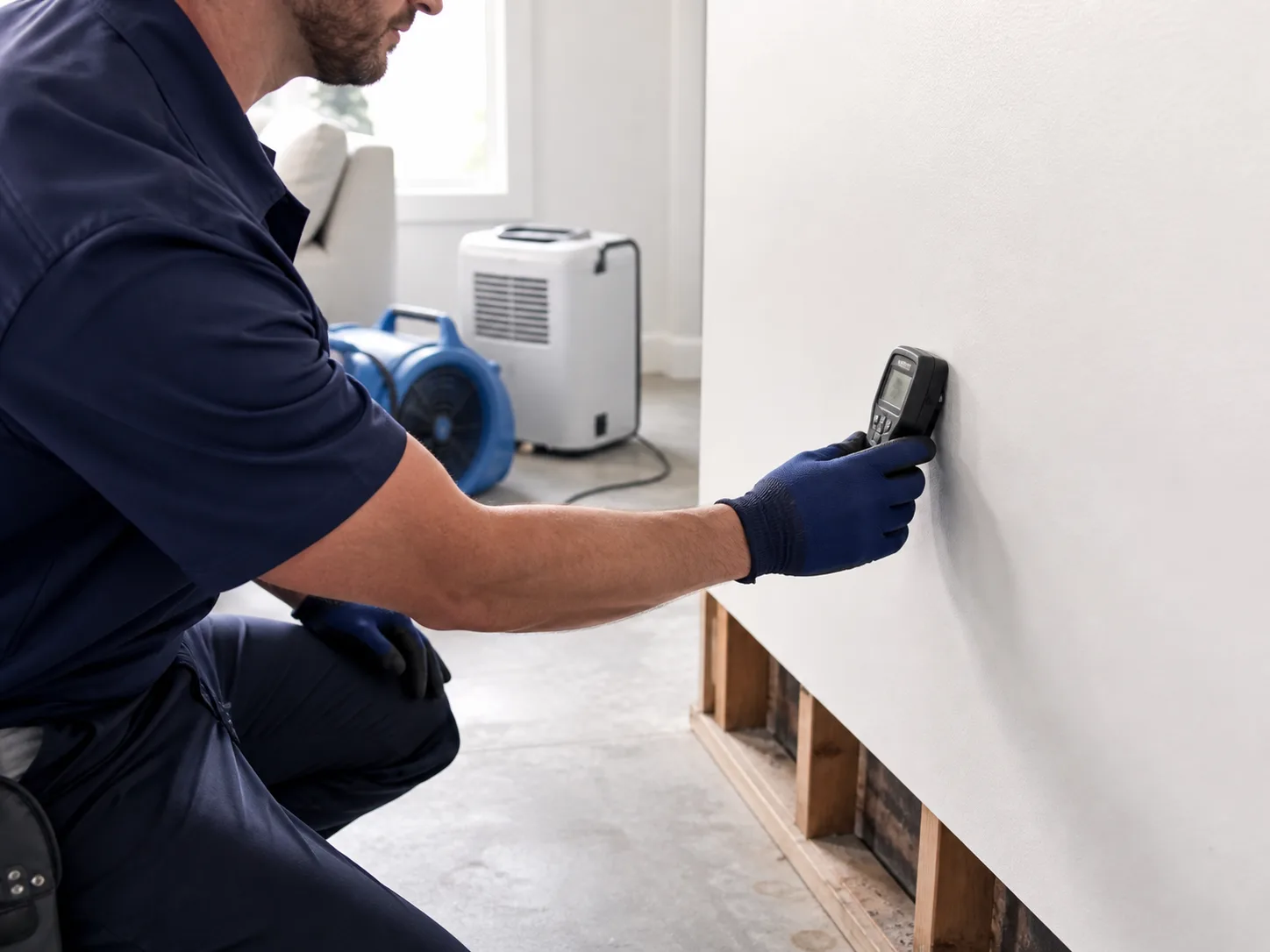
Moisture detection helps locate water migration behind finishes and beneath flooring so the drying plan covers the actual affected area.
How this damage develops
Moisture detection combines inspection history, building knowledge, non-invasive comparison readings and direct confirmation. Instruments locate anomalies; they do not replace source tracing or material interpretation.
Signs that deserve closer inspection
- A stain that extends beyond its apparent source.
- Cool thermal patterns near plumbing or exterior openings.
- Warping, odor or finish changes without visible water.
- Different readings between suspect and known-dry material.
What changes the restoration scope?
The visible mark is only one piece of evidence. Source behavior, construction and access determine where inspection and drying need to continue.
- Meter mode. Pin, pinless and relative scales answer different questions.
- Material density. Metal, fasteners and layered assemblies can affect readings.
- Thermal confirmation. Temperature differences require a moisture measurement or direct inspection.
Limits and material decisions
No handheld tool proves what is behind every surface. Infrared cameras do not see through walls, and isolated numbers without references can be misleading.
A practical response sequence
- Interview and trace the source
Use timing and building routes to set inspection priorities.
- Scan broad areas
Compare patterns rather than chasing one number.
- Confirm suspect locations
Use direct readings or selective access where justified.
- Create repeatable monitoring points
Track the same materials through drying.
Extraction, drying and repair are separate decisions
Extraction removes accessible liquid water. Structural drying addresses retained moisture in the assembly. Repair follows only after the source is corrected and affected materials have been evaluated for condition, contamination and moisture.
Related services and guidance
Structural Drying
Structural drying reduces moisture retained in drywall, framing, subfloors and other building materials after bulk water is removed.
Learn more→How to Find Hidden Water Damage
How to Find Hidden Water Damage starts with understanding the source, the affected materials and the immediate safety decisions. This guide explains the practical factors that shape the next step.
Learn more→Water Damage in Walls
Water Damage in Walls requires evaluation of the material, water source, contamination and how far moisture has traveled beyond the visible mark.
Learn moreFrequently asked questions
How does moisture detection develop?
Moisture detection combines inspection history, building knowledge, non-invasive comparison readings and direct confirmation. Instruments locate anomalies; they do not replace source tracing or material interpretation.
What are common signs of moisture detection?
Look for a stain that extends beyond its apparent source; cool thermal patterns near plumbing or exterior openings; warping, odor or finish changes without visible water.
What factors change the restoration scope?
Meter mode: Pin, pinless and relative scales answer different questions. Material density: Metal, fasteners and layered assemblies can affect readings. Thermal confirmation: Temperature differences require a moisture measurement or direct inspection.
What should property owners avoid?
No handheld tool proves what is behind every surface. Infrared cameras do not see through walls, and isolated numbers without references can be misleading.
Need help with water damage?
Describe the source, affected rooms and when the problem began.