How to Find Hidden Water Damage starts with understanding the source, the affected materials and the immediate safety decisions. This guide explains the practical factors that shape the next step. The useful question is not whether water is visible; it is where the water traveled, what it contacted and which decision must happen next.
What is How to Find Hidden Water Damage?
Hidden water damage is moisture and material deterioration located behind walls, beneath flooring, inside cabinets, above ceilings or in other areas that cannot be confirmed by surface appearance alone.
That definition sets the boundary of the topic. Source control, extraction, moisture detection and structural drying are related, but they are not interchangeable. Each answers a different property question.
Key factors that shape the situation
No single observation determines the full scope. These factors carry the most weight:
- Odor and finish changes. Musty odor, bubbling paint and warped trim can point to concealed moisture.
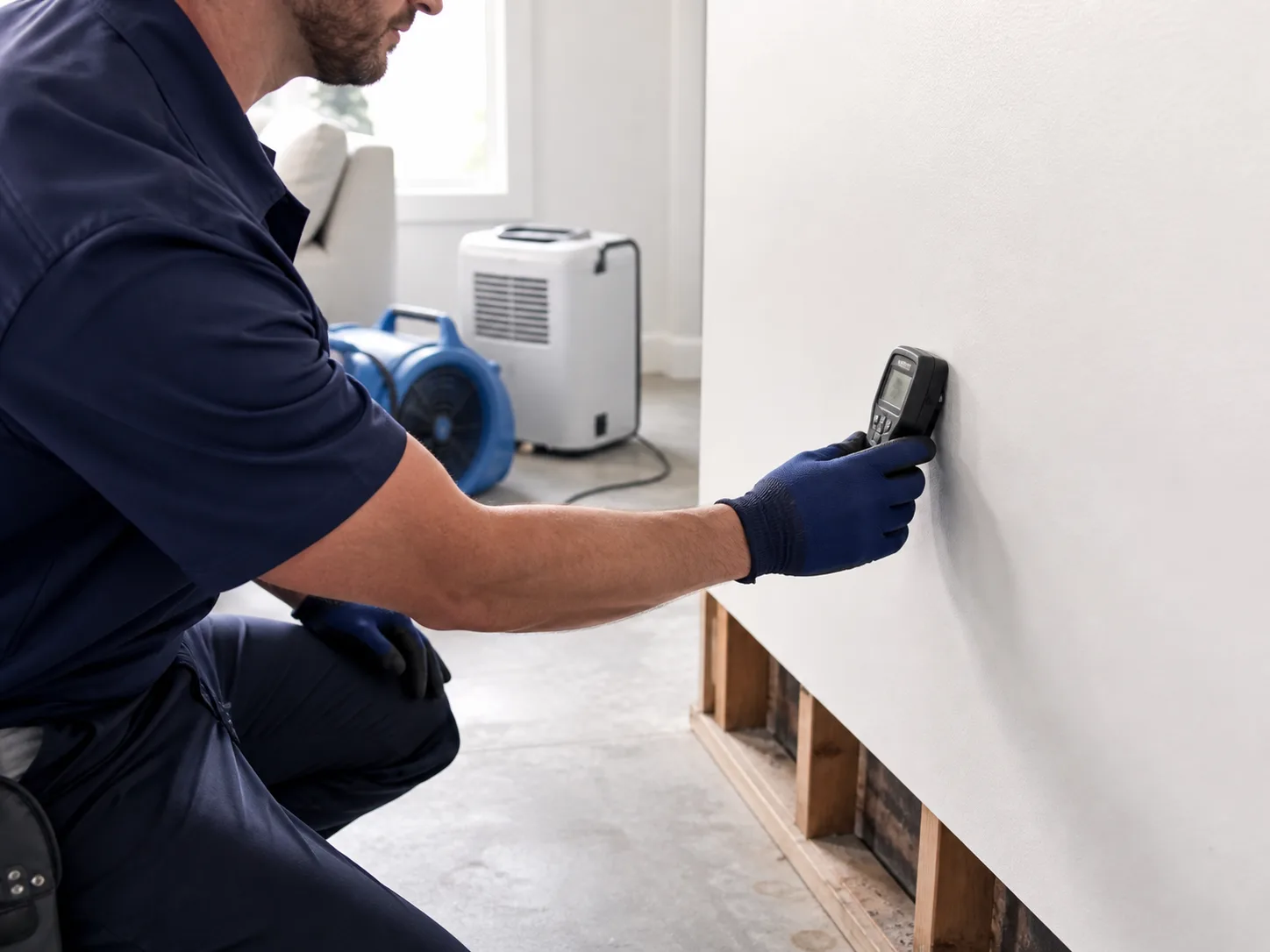
- Material readings. Meters compare suspect areas with known dry reference locations.
- Thermal patterns. Infrared imaging can identify temperature differences that require confirmation.
- Source tracing. Plumbing routes, roof entry and gravity help predict the water path.
Practical benefits of an organized response
- Finds affected areas before repairs conceal them.
- Directs selective access instead of broad unnecessary demolition.
- Creates measurable locations for drying progress checks.
Moisture inspection vs. Visual inspection only
The distinction matters because the two approaches answer different questions and can produce very different scopes.
| Factor | Moisture inspection | Visual inspection only |
|---|---|---|
| Evidence | Readings plus visible conditions | Stains and touch |
| Concealed spaces | Targeted testing | Limited |
| Drying decision | Measured by material | Surface appearance |
| Limit | May require access | Can miss trapped moisture |
Limitations and disadvantages
No non-invasive tool can see through every assembly with certainty. Thermal imaging does not directly measure moisture, and meter readings require correct material settings and interpretation.
What to do: a practical sequence
- Trace the likely source
Follow plumbing, roof and floor connections.
- Compare surfaces
Take readings in suspect and unaffected reference areas.
- Confirm anomalies
Use direct testing or selective access where justified.
- Monitor the same points
Track changes until the material reaches an appropriate condition.