Commercial Water Damage Restoration
Commercial restoration coordinates extraction and drying around building access, occupants, equipment and continuity needs.
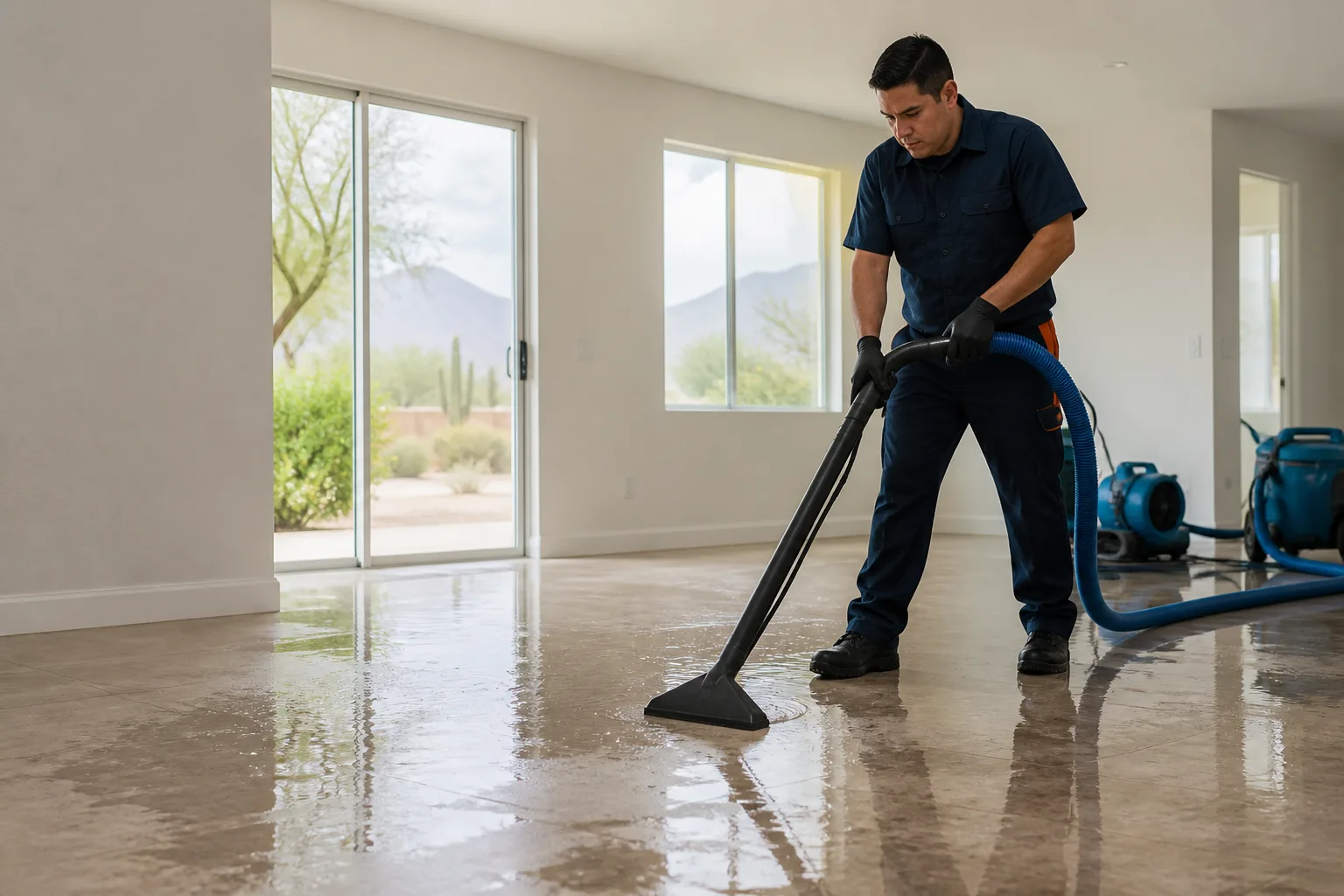
Commercial restoration coordinates extraction and drying around building access, occupants, equipment and continuity needs.
How this damage develops
Commercial restoration adds operational planning to extraction and drying. Work zones, tenants, inventory, equipment, access hours and decision authority must be coordinated while the moisture problem is addressed.
Signs that deserve closer inspection
- Water crossing occupied, storage or customer-facing zones.
- Wet ceiling systems above equipment or merchandise.
- Moisture under commercial flooring or demising walls.
- Several stakeholders requesting different access priorities.
What changes the restoration scope?
The visible mark is only one piece of evidence. Source behavior, construction and access determine where inspection and drying need to continue.
- Continuity priorities. Critical spaces and safe access routes shape phasing.
- Stakeholders. Owners, managers, tenants and insurers require a shared record.
- Building systems. Ceiling grids, raised floors and large HVAC volumes change drying strategy.
Limits and material decisions
Minimal downtime cannot be guaranteed. Safety, contamination, material access and trade availability may require partial closure or phased work.
A practical response sequence
- Establish authority and contacts
Identify who approves access and scope changes.
- Zone the affected operation
Separate unsafe, active and unaffected pathways.
- Document by area
Track moisture, contents and equipment geographically.
- Phase drying and repairs
Coordinate work around verified operational priorities.
Extraction, drying and repair are separate decisions
Extraction removes accessible liquid water. Structural drying addresses retained moisture in the assembly. Repair follows only after the source is corrected and affected materials have been evaluated for condition, contamination and moisture.
Related services and guidance
Emergency Water Damage Help
A sudden leak or overflow requires a safe, organized response. Avoid wet areas where electricity may be present and do not handle contaminated water.
Learn more→Water Extraction & Water Removal
Water extraction uses pumps and professional vacuum equipment to remove standing water from floors, carpets and accessible cavities.
Learn more→Request Service
Discuss the affected area and request the appropriate next step.
Learn moreFrequently asked questions
How does commercial water damage restoration develop?
Commercial restoration adds operational planning to extraction and drying. Work zones, tenants, inventory, equipment, access hours and decision authority must be coordinated while the moisture problem is addressed.
What are common signs of commercial water damage restoration?
Look for water crossing occupied, storage or customer-facing zones; wet ceiling systems above equipment or merchandise; moisture under commercial flooring or demising walls.
What factors change the restoration scope?
Continuity priorities: Critical spaces and safe access routes shape phasing. Stakeholders: Owners, managers, tenants and insurers require a shared record. Building systems: Ceiling grids, raised floors and large HVAC volumes change drying strategy.
What should property owners avoid?
Minimal downtime cannot be guaranteed. Safety, contamination, material access and trade availability may require partial closure or phased work.
Need help with water damage?
Describe the source, affected rooms and when the problem began.