Emergency Water Damage Help
A sudden leak or overflow requires a safe, organized response. Avoid wet areas where electricity may be present and do not handle contaminated water.
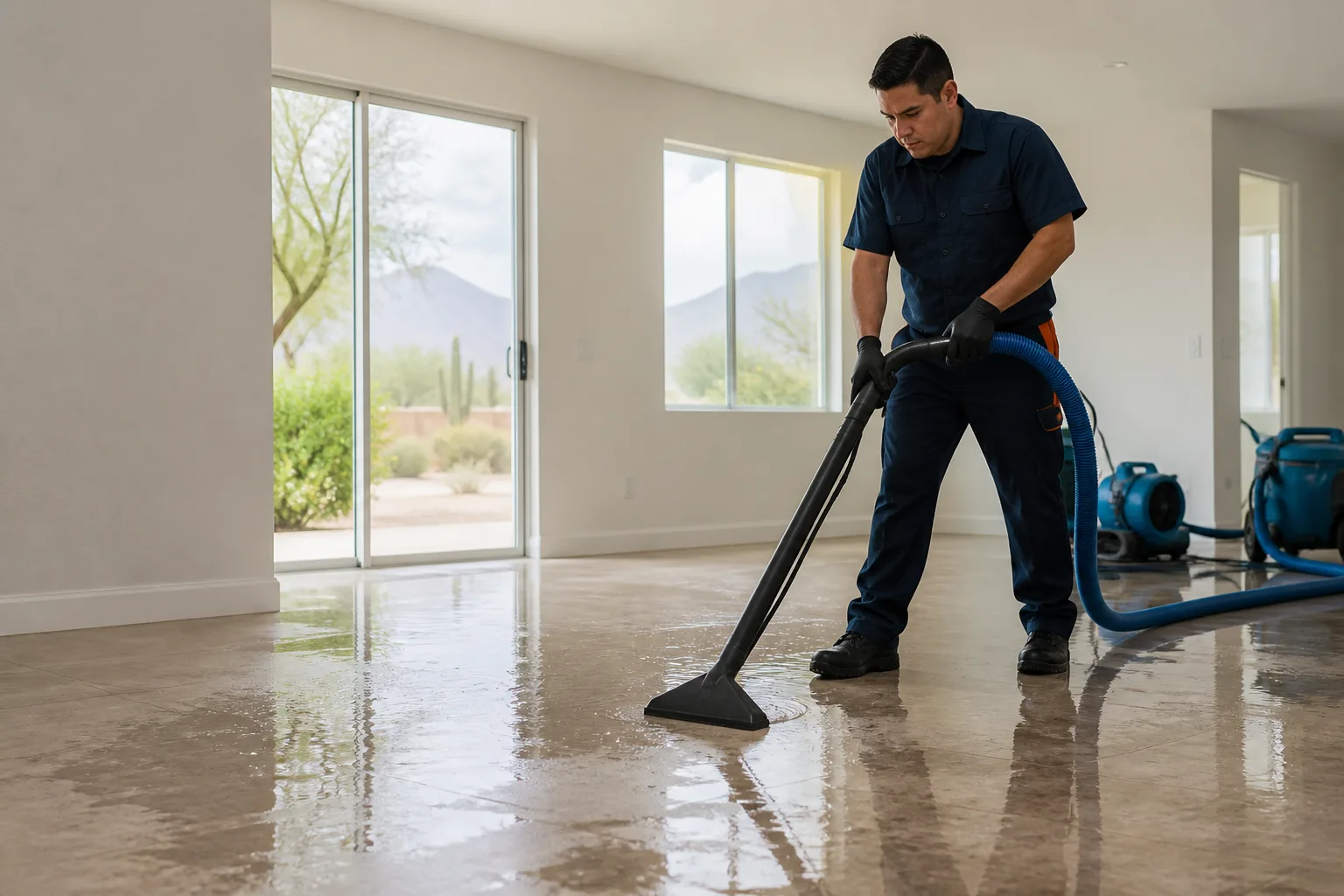
A sudden leak or overflow requires a safe, organized response. Avoid wet areas where electricity may be present and do not handle contaminated water.
How this damage develops
Emergency water response prioritizes life safety, source control and prevention of continued migration. The first decisions are made while conditions are changing, so access boundaries and concise documentation matter.
Signs that deserve closer inspection
- An active release that cannot be contained with a small vessel.
- Water approaching outlets, appliances or an electrical panel.
- A sagging ceiling, unstable finish or slippery access route.
- Water moving toward additional rooms or a lower level.
What changes the restoration scope?
The visible mark is only one piece of evidence. Source behavior, construction and access determine where inspection and drying need to continue.
- Active source. Ongoing pressure or rainfall changes the immediate priority.
- Electrical exposure. Wet energized areas remain off-limits until qualified evaluation.
- Occupancy. Children, older adults, tenants and commercial occupants affect access control.
Limits and material decisions
“Emergency” does not justify unsafe entry or unsupported response-time promises. A restoration crew cannot correct every plumbing, structural or electrical hazard.
A practical response sequence
- Keep people away
Establish a clear boundary around wet and unstable areas.
- Stop the source only when safe
Use accessible water controls without crossing hazards.
- Document changing conditions
Record rooms, time and visible movement.
- Begin controlled mitigation
Coordinate extraction, contamination controls and moisture mapping.
Extraction, drying and repair are separate decisions
Extraction removes accessible liquid water. Structural drying addresses retained moisture in the assembly. Repair follows only after the source is corrected and affected materials have been evaluated for condition, contamination and moisture.
Related services and guidance
Water Extraction & Water Removal
Water extraction uses pumps and professional vacuum equipment to remove standing water from floors, carpets and accessible cavities.
Learn more→Water Damage Restoration Services in Green Valley, AZ
Water damage restoration removes unwanted water, identifies affected materials and supports controlled drying after leaks, flooding or plumbing failures.
Learn more→Water Damage Insurance Guide
Water Damage Insurance Guide starts with understanding the source, the affected materials and the immediate safety decisions. This guide explains the practical factors that shape the next step.
Learn moreFrequently asked questions
How does emergency water damage help develop?
Emergency water response prioritizes life safety, source control and prevention of continued migration. The first decisions are made while conditions are changing, so access boundaries and concise documentation matter.
What are common signs of emergency water damage help?
Look for an active release that cannot be contained with a small vessel; water approaching outlets, appliances or an electrical panel; a sagging ceiling, unstable finish or slippery access route.
What factors change the restoration scope?
Active source: Ongoing pressure or rainfall changes the immediate priority. Electrical exposure: Wet energized areas remain off-limits until qualified evaluation. Occupancy: Children, older adults, tenants and commercial occupants affect access control.
What should property owners avoid?
“Emergency” does not justify unsafe entry or unsupported response-time promises. A restoration crew cannot correct every plumbing, structural or electrical hazard.
Need help with water damage?
Describe the source, affected rooms and when the problem began.