Water Damage Restoration Services in Green Valley, AZ
Water damage restoration removes unwanted water, identifies affected materials and supports controlled drying after leaks, flooding or plumbing failures.
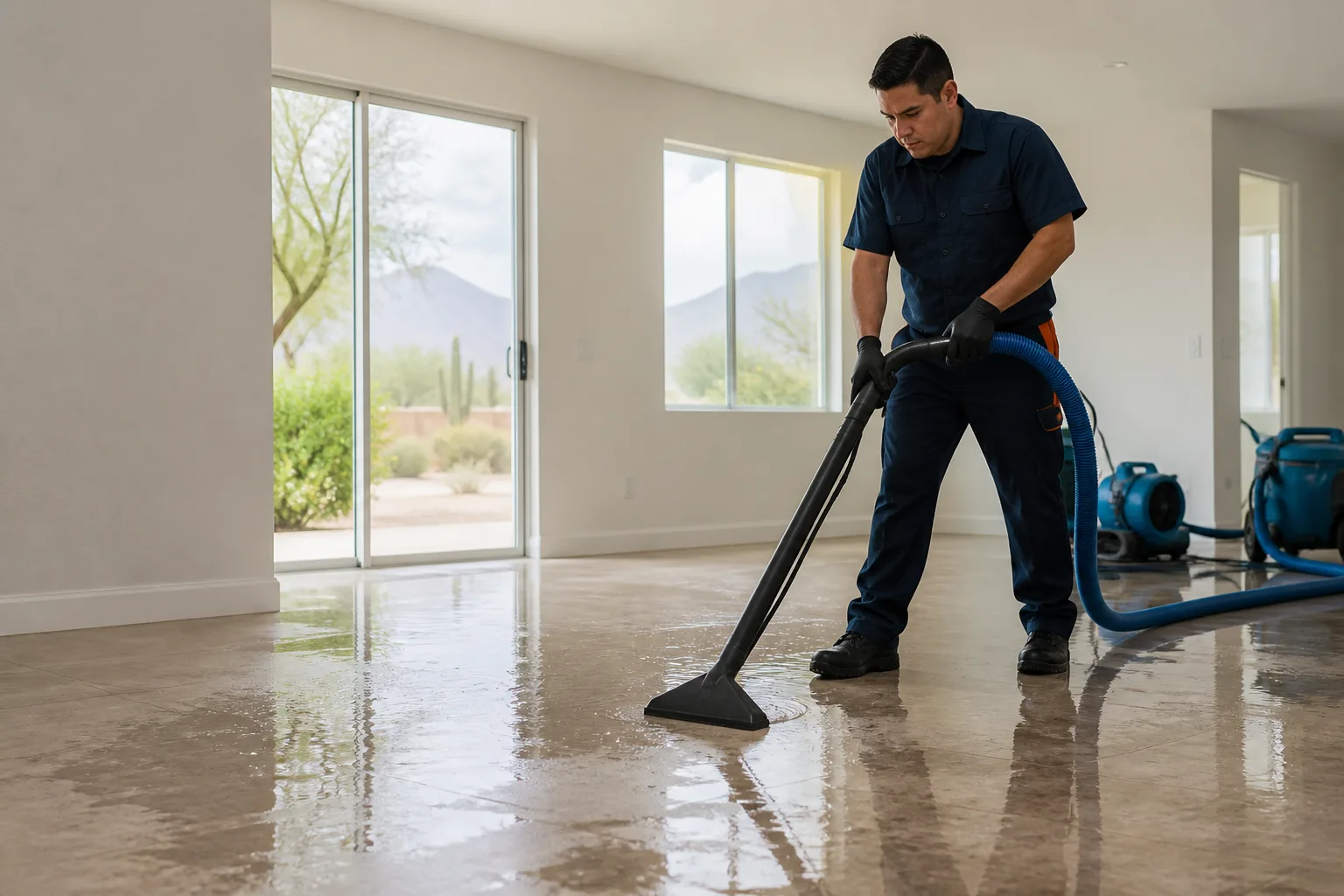
Water damage restoration removes unwanted water, identifies affected materials and supports controlled drying after leaks, flooding or plumbing failures.
How this damage develops
Restoration connects several distinct tasks: source correction, extraction, contamination control, moisture mapping, structural drying, cleaning and repair preparation. The sequence changes with the building assembly and condition of the water.
Signs that deserve closer inspection
- Standing water or wet finishes after a plumbing failure.
- Moisture extending into more than one room or level.
- Swollen flooring, soft drywall or damp insulation.
- Humidity or odor remaining after visible water is removed.
What changes the restoration scope?
The visible mark is only one piece of evidence. Source behavior, construction and access determine where inspection and drying need to continue.
- Full water path. Inspection follows water through connected walls, floors and cavities.
- Material condition. Strength, finish adhesion and contamination influence salvage.
- Drying goals. Repeat readings guide equipment changes and completion.
Limits and material decisions
Restoration cannot guarantee that every finish will be retained. It also does not replace plumbing, roofing, electrical or reconstruction work performed by qualified trades.
A practical response sequence
- Assess source and safety
Identify hazards and confirm that new water is controlled.
- Extract liquid water
Reduce the load before detailed drying.
- Set and monitor drying
Match airflow and humidity control to the assembly.
- Prepare for repair
Document dry-condition and material decisions.
Extraction, drying and repair are separate decisions
Extraction removes accessible liquid water. Structural drying addresses retained moisture in the assembly. Repair follows only after the source is corrected and affected materials have been evaluated for condition, contamination and moisture.
Related services and guidance
Water Extraction & Water Removal
Water extraction uses pumps and professional vacuum equipment to remove standing water from floors, carpets and accessible cavities.
Learn more→Structural Drying
Structural drying reduces moisture retained in drywall, framing, subfloors and other building materials after bulk water is removed.
Learn more→Moisture Detection
Moisture detection helps locate water migration behind finishes and beneath flooring so the drying plan covers the actual affected area.
Learn moreFrequently asked questions
How does water damage restoration services in green valley, az develop?
Restoration connects several distinct tasks: source correction, extraction, contamination control, moisture mapping, structural drying, cleaning and repair preparation. The sequence changes with the building assembly and condition of the water.
What are common signs of water damage restoration services in green valley, az?
Look for standing water or wet finishes after a plumbing failure; moisture extending into more than one room or level; swollen flooring, soft drywall or damp insulation.
What factors change the restoration scope?
Full water path: Inspection follows water through connected walls, floors and cavities. Material condition: Strength, finish adhesion and contamination influence salvage. Drying goals: Repeat readings guide equipment changes and completion.
What should property owners avoid?
Restoration cannot guarantee that every finish will be retained. It also does not replace plumbing, roofing, electrical or reconstruction work performed by qualified trades.
Need help with water damage?
Describe the source, affected rooms and when the problem began.