Structural Drying
Structural drying reduces moisture retained in drywall, framing, subfloors and other building materials after bulk water is removed.
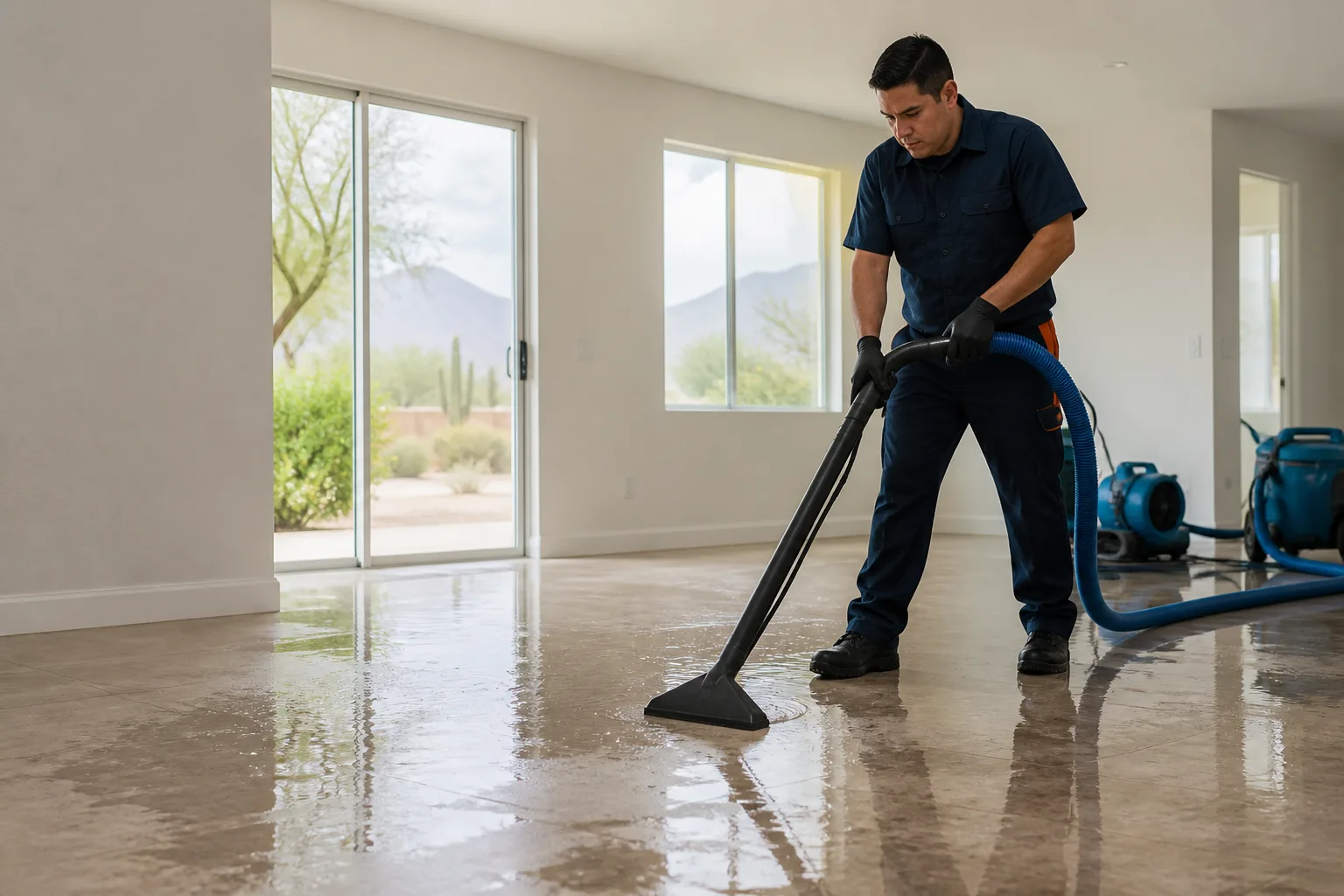
Structural drying reduces moisture retained in drywall, framing, subfloors and other building materials after bulk water is removed.
How this damage develops
Structural drying manages evaporation from wet materials and removes that water vapor from the air. Air movers, dehumidifiers, temperature and access work together; equipment count alone does not establish performance.
Signs that deserve closer inspection
- Materials remain elevated after standing water is gone.
- Condensation or high indoor humidity persists.
- Wood, subfloor or gypsum readings change slowly.
- Closed cavities or finishes restrict evaporation.
What changes the restoration scope?
The visible mark is only one piece of evidence. Source behavior, construction and access determine where inspection and drying need to continue.
- Evaporation surface. Air must reach the wet material rather than merely circulate in the room.
- Dehumidification capacity. Vapor removal must keep pace with evaporation.
- Material targets. Dry goals use reference conditions and material-specific readings.
Limits and material decisions
Faster is not always safer. Excess heat or airflow can damage finishes, while equipment without access to wet layers produces little benefit.
A practical response sequence
- Establish baseline readings
Map each material and unaffected reference points.
- Create evaporation access
Expose wet surfaces with selective, justified steps.
- Balance air and vapor removal
Arrange equipment for the actual load.
- Monitor and adjust
Use repeat measurements instead of a fixed calendar.
Extraction, drying and repair are separate decisions
Extraction removes accessible liquid water. Structural drying addresses retained moisture in the assembly. Repair follows only after the source is corrected and affected materials have been evaluated for condition, contamination and moisture.
Related services and guidance
Moisture Detection
Moisture detection helps locate water migration behind finishes and beneath flooring so the drying plan covers the actual affected area.
Learn more→Water Extraction & Water Removal
Water extraction uses pumps and professional vacuum equipment to remove standing water from floors, carpets and accessible cavities.
Learn more→Drywall Water Damage
Drywall Water Damage requires evaluation of the material, water source, contamination and how far moisture has traveled beyond the visible mark.
Learn moreFrequently asked questions
How does structural drying develop?
Structural drying manages evaporation from wet materials and removes that water vapor from the air. Air movers, dehumidifiers, temperature and access work together; equipment count alone does not establish performance.
What are common signs of structural drying?
Look for materials remain elevated after standing water is gone; condensation or high indoor humidity persists; wood, subfloor or gypsum readings change slowly.
What factors change the restoration scope?
Evaporation surface: Air must reach the wet material rather than merely circulate in the room. Dehumidification capacity: Vapor removal must keep pace with evaporation. Material targets: Dry goals use reference conditions and material-specific readings.
What should property owners avoid?
Faster is not always safer. Excess heat or airflow can damage finishes, while equipment without access to wet layers produces little benefit.
Need help with water damage?
Describe the source, affected rooms and when the problem began.