Drywall Water Damage
Drywall Water Damage requires evaluation of the material, water source, contamination and how far moisture has traveled beyond the visible mark.
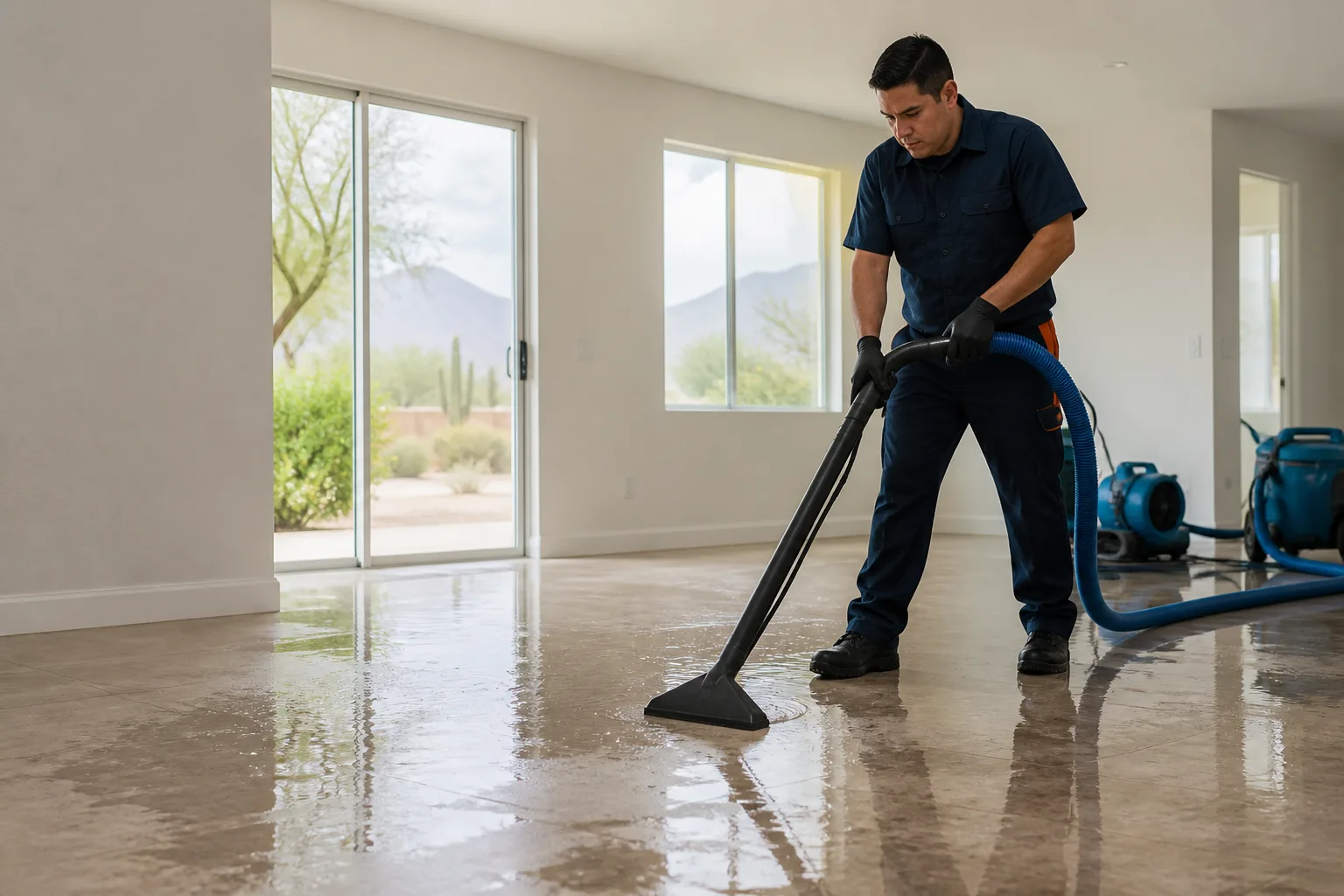
Drywall Water Damage requires evaluation of the material, water source, contamination and how far moisture has traveled beyond the visible mark.
How this damage develops
Drywall absorbs water through its paper facing, cut edges and contact with wet framing. Capillary movement can raise moisture above the visible water line, while paint or vinyl wallcovering slows evaporation.
Signs that deserve closer inspection
- Softness, swelling or crumbling at the base.
- Bubbling paint or loose joint tape.
- Elevated meter readings above a visible stain.
- Damp insulation or framing behind an outlet-height opening.
What changes the restoration scope?
The visible mark is only one piece of evidence. Source behavior, construction and access determine where inspection and drying need to continue.
- Water condition. Contamination can make porous gypsum unsuitable for retention.
- Coatings. Low-permeance paint or wallcovering can trap moisture.
- Cavity contents. Insulation and double-layer assemblies extend drying time.
Limits and material decisions
A moisture meter reading requires a dry reference and material context. Drywall that has lost strength, separated or contacted gross contamination may require removal.
A practical response sequence
- Mark the moisture boundary
Measure above and beside visible effects.
- Check the wall cavity
Identify insulation, vapor layers and the source path.
- Create appropriate evaporation access
Remove trim or make selective openings only when justified.
- Verify framing and gypsum separately
Do not close the wall on a surface-only reading.
Extraction, drying and repair are separate decisions
Extraction removes accessible liquid water. Structural drying addresses retained moisture in the assembly. Repair follows only after the source is corrected and affected materials have been evaluated for condition, contamination and moisture.
Related services and guidance
Moisture Detection
Moisture detection helps locate water migration behind finishes and beneath flooring so the drying plan covers the actual affected area.
Learn more→Structural Drying
Structural drying reduces moisture retained in drywall, framing, subfloors and other building materials after bulk water is removed.
Learn more→Water Damage Restoration Services in Green Valley, AZ
Water damage restoration removes unwanted water, identifies affected materials and supports controlled drying after leaks, flooding or plumbing failures.
Learn moreFrequently asked questions
How does drywall water damage develop?
Drywall absorbs water through its paper facing, cut edges and contact with wet framing. Capillary movement can raise moisture above the visible water line, while paint or vinyl wallcovering slows evaporation.
What are common signs of drywall water damage?
Look for softness, swelling or crumbling at the base; bubbling paint or loose joint tape; elevated meter readings above a visible stain.
What factors change the restoration scope?
Water condition: Contamination can make porous gypsum unsuitable for retention. Coatings: Low-permeance paint or wallcovering can trap moisture. Cavity contents: Insulation and double-layer assemblies extend drying time.
What should property owners avoid?
A moisture meter reading requires a dry reference and material context. Drywall that has lost strength, separated or contacted gross contamination may require removal.
Need help with water damage?
Describe the source, affected rooms and when the problem began.