Water Extraction & Water Removal
Water extraction uses pumps and professional vacuum equipment to remove standing water from floors, carpets and accessible cavities.
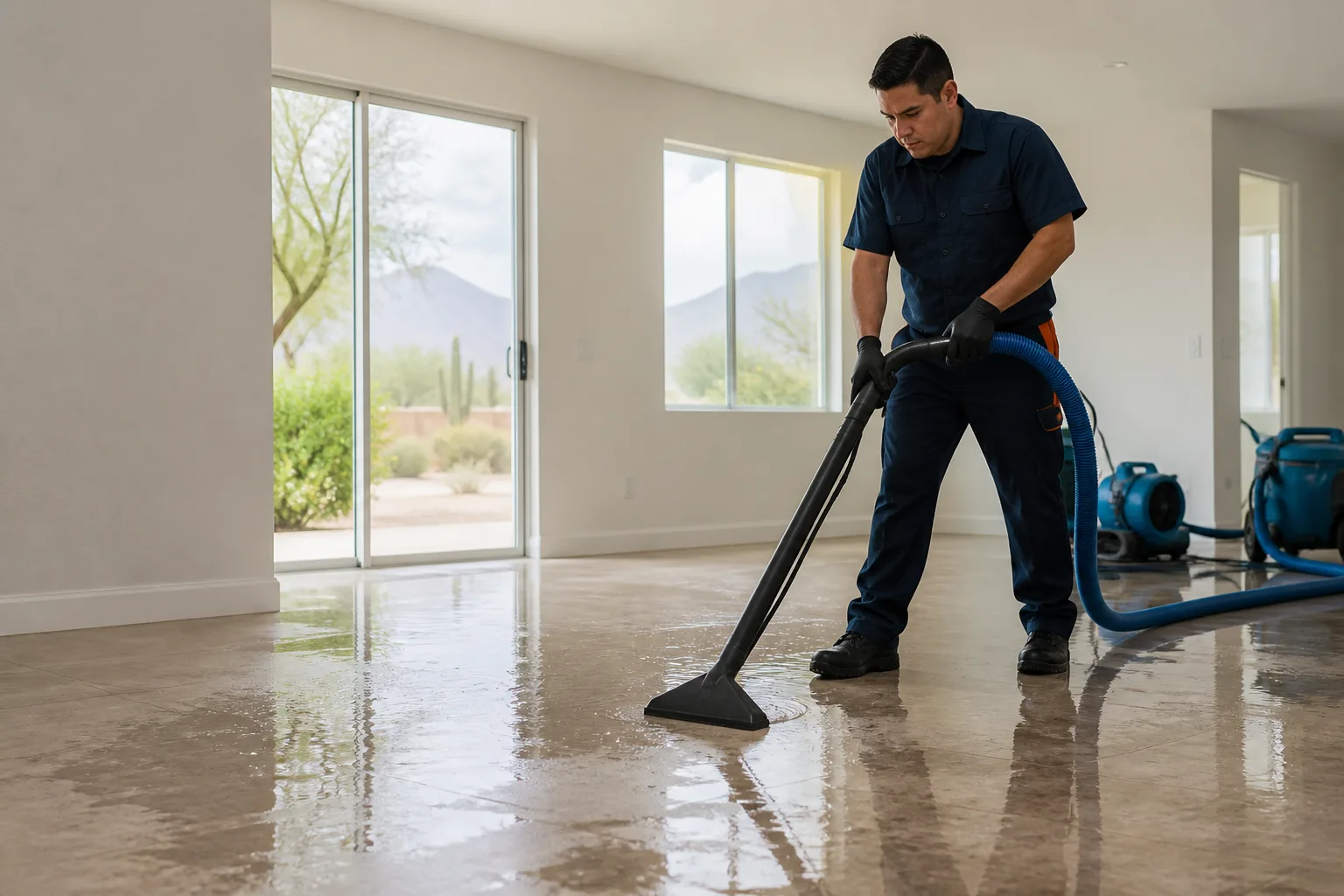
Water extraction uses pumps and professional vacuum equipment to remove standing water from floors, carpets and accessible cavities.
How this damage develops
Extraction removes accessible liquid water with pumps, weighted tools and vacuum systems. It reduces the amount that must later evaporate, but it does not remove moisture bound inside wood, gypsum, cushion or insulation.
Signs that deserve closer inspection
- Pooled water on hard surfaces or inside floor depressions.
- Saturated carpet and cushion that release water under pressure.
- Water trapped beneath floating floors or inside accessible cavities.
- Continued seepage after the main pool is removed.
What changes the restoration scope?
The visible mark is only one piece of evidence. Source behavior, construction and access determine where inspection and drying need to continue.
- Depth and volume. Submersible pumps and surface extraction address different conditions.
- Floor system. Carpet, wood and resilient flooring require different tool pressure and access.
- Water condition. Contamination controls affect equipment movement and disposal.
Limits and material decisions
Extraction is not a drying certificate. Vacuuming the surface cannot confirm subfloor, wall or cabinet moisture, and aggressive tools can damage delicate finishes.
A practical response sequence
- Map accessible water
Identify rooms, low points and floor transitions.
- Select extraction method
Match equipment to depth and material.
- Work from controlled areas
Avoid spreading contaminated water.
- Measure retained moisture
Move directly into structural-drying assessment.
Extraction, drying and repair are separate decisions
Extraction removes accessible liquid water. Structural drying addresses retained moisture in the assembly. Repair follows only after the source is corrected and affected materials have been evaluated for condition, contamination and moisture.
Related services and guidance
Structural Drying
Structural drying reduces moisture retained in drywall, framing, subfloors and other building materials after bulk water is removed.
Learn more→Moisture Detection
Moisture detection helps locate water migration behind finishes and beneath flooring so the drying plan covers the actual affected area.
Learn more→Flood Cleanup
Flood cleanup addresses water removal, affected contents, residue and moisture left across multiple rooms or building materials.
Learn moreFrequently asked questions
How does water extraction & water removal develop?
Extraction removes accessible liquid water with pumps, weighted tools and vacuum systems. It reduces the amount that must later evaporate, but it does not remove moisture bound inside wood, gypsum, cushion or insulation.
What are common signs of water extraction & water removal?
Look for pooled water on hard surfaces or inside floor depressions; saturated carpet and cushion that release water under pressure; water trapped beneath floating floors or inside accessible cavities.
What factors change the restoration scope?
Depth and volume: Submersible pumps and surface extraction address different conditions. Floor system: Carpet, wood and resilient flooring require different tool pressure and access. Water condition: Contamination controls affect equipment movement and disposal.
What should property owners avoid?
Extraction is not a drying certificate. Vacuuming the surface cannot confirm subfloor, wall or cabinet moisture, and aggressive tools can damage delicate finishes.
Need help with water damage?
Describe the source, affected rooms and when the problem began.