Flood Cleanup
Flood cleanup addresses water removal, affected contents, residue and moisture left across multiple rooms or building materials.
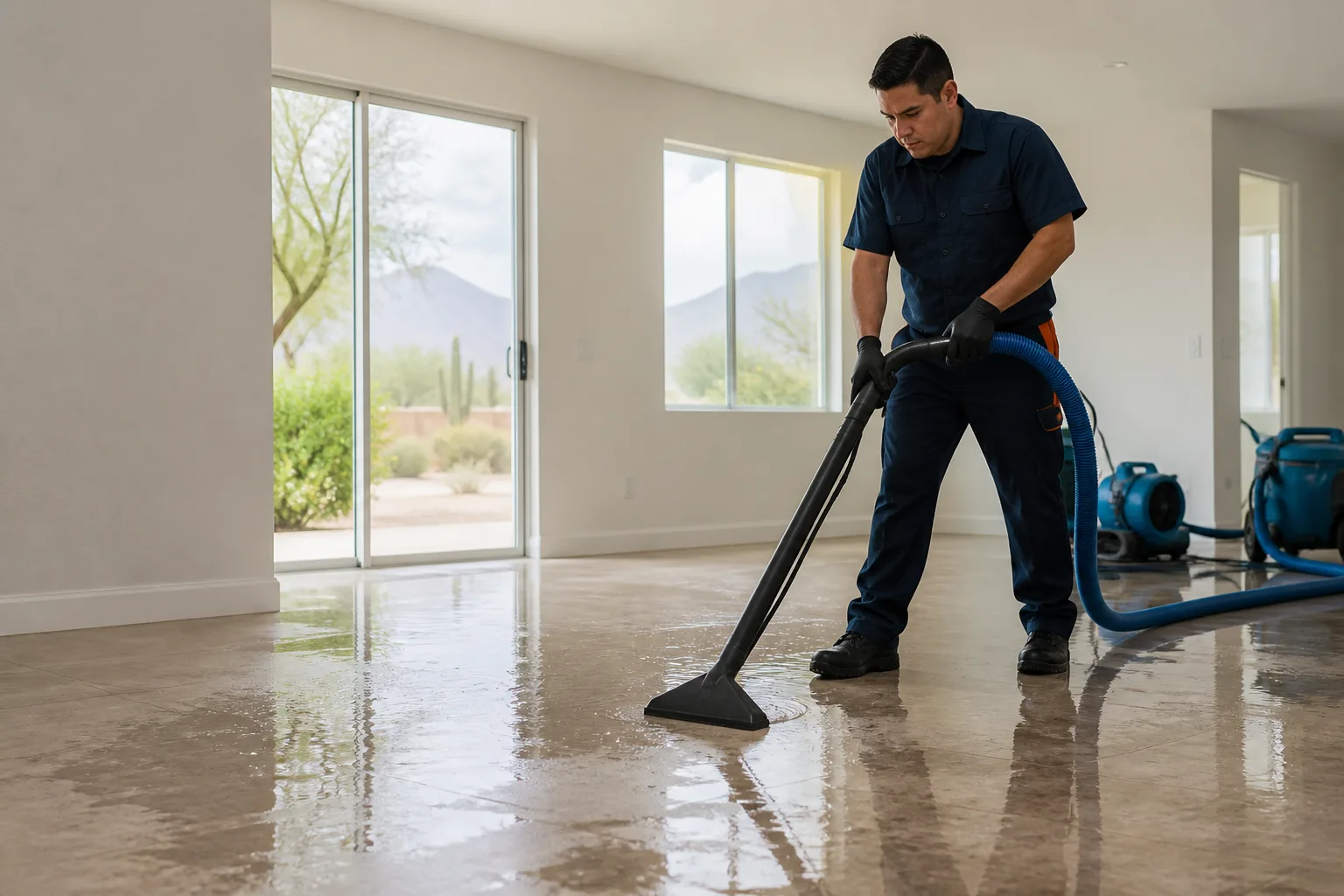
Flood cleanup addresses water removal, affected contents, residue and moisture left across multiple rooms or building materials.
How this damage develops
Flood cleanup combines water removal with debris control, contamination assessment, cleaning, material disposition and humidity management. Outside floodwater and sewage require different precautions from a clean supply-line release.
Signs that deserve closer inspection
- Silt, residue or debris left at a water line.
- Water across multiple rooms or broad floor areas.
- Odor or discoloration in porous contents and finishes.
- Humidity and condensation beyond the visibly flooded space.
What changes the restoration scope?
The visible mark is only one piece of evidence. Source behavior, construction and access determine where inspection and drying need to continue.
- Source category. Surface water, sewage and plumbing water drive different handling rules.
- Contents. Furniture and stored items can block extraction and carry residue.
- Work zones. Clean and affected pathways help limit cross-contamination.
Limits and material decisions
Many porous materials cannot be retained after grossly contaminated flooding. Household cleaning products and fans do not replace controlled removal, cleaning and drying.
A practical response sequence
- Classify access and water
Do not enter until electrical and contamination conditions are considered.
- Remove water and debris
Use controlled routes and suitable equipment.
- Clean affected surfaces
Match methods to the source and material.
- Dry the building volume
Manage retained moisture and airborne humidity.
Extraction, drying and repair are separate decisions
Extraction removes accessible liquid water. Structural drying addresses retained moisture in the assembly. Repair follows only after the source is corrected and affected materials have been evaluated for condition, contamination and moisture.
Related services and guidance
Water Extraction & Water Removal
Water extraction uses pumps and professional vacuum equipment to remove standing water from floors, carpets and accessible cavities.
Learn more→Structural Drying
Structural drying reduces moisture retained in drywall, framing, subfloors and other building materials after bulk water is removed.
Learn more→What to Do After a House Flood
What to Do After a House Flood starts with understanding the source, the affected materials and the immediate safety decisions. This guide explains the practical factors that shape the next step.
Learn moreFrequently asked questions
How does flood cleanup develop?
Flood cleanup combines water removal with debris control, contamination assessment, cleaning, material disposition and humidity management. Outside floodwater and sewage require different precautions from a clean supply-line release.
What are common signs of flood cleanup?
Look for silt, residue or debris left at a water line; water across multiple rooms or broad floor areas; odor or discoloration in porous contents and finishes.
What factors change the restoration scope?
Source category: Surface water, sewage and plumbing water drive different handling rules. Contents: Furniture and stored items can block extraction and carry residue. Work zones: Clean and affected pathways help limit cross-contamination.
What should property owners avoid?
Many porous materials cannot be retained after grossly contaminated flooding. Household cleaning products and fans do not replace controlled removal, cleaning and drying.
Need help with water damage?
Describe the source, affected rooms and when the problem began.