Water Damage in Walls
Water Damage in Walls requires evaluation of the material, water source, contamination and how far moisture has traveled beyond the visible mark.
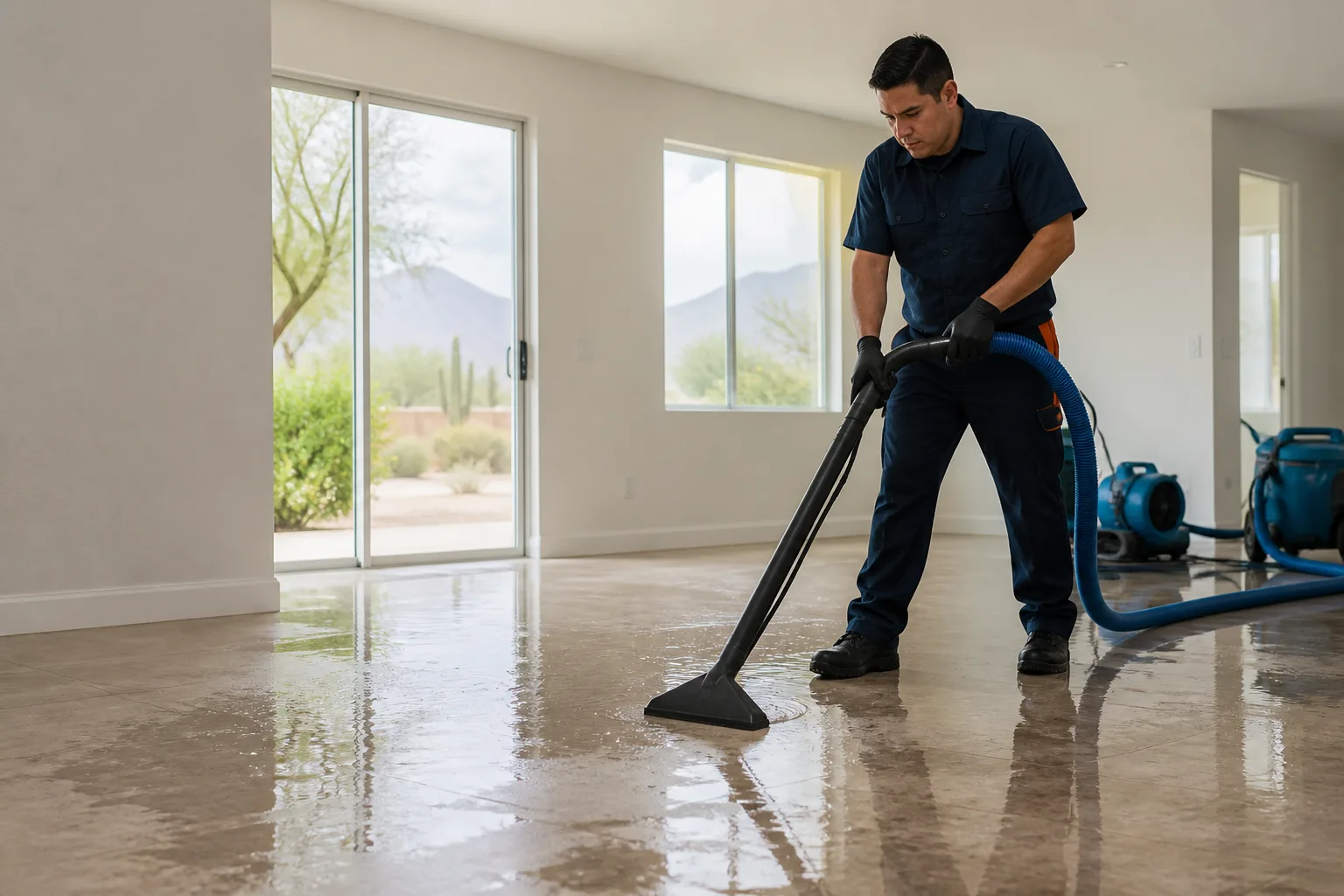
Water Damage in Walls requires evaluation of the material, water source, contamination and how far moisture has traveled beyond the visible mark.
How this damage develops
Wall assemblies can receive water from plumbing, roof paths, exterior openings or floor-level flooding. Stud bays, insulation, sill plates and multiple gypsum layers create concealed reservoirs that surface drying cannot reach evenly.
Signs that deserve closer inspection
- Swollen baseboard or staining at wall corners.
- Cool thermal patterns that persist after surface cleanup.
- Elevated readings beside pipe chases or window openings.
- Odor from insulated cavities with little visible damage.
What changes the restoration scope?
The visible mark is only one piece of evidence. Source behavior, construction and access determine where inspection and drying need to continue.
- Wall construction. Insulated exterior walls behave differently from empty interior partitions.
- Vertical migration. Water can wick upward or descend from a source above.
- Vapor resistance. Tile, cabinets, vinyl covering and coatings reduce evaporation.
Limits and material decisions
Thermal imaging shows temperature patterns, not moisture itself. Opening a wall without source tracing can miss the actual reservoir or disturb hazardous material.
A practical response sequence
- Trace the likely water path
Use plumbing, framing and gravity as guides.
- Compare meter readings
Test suspect and known-dry sections.
- Assess cavity access
Remove baseboard or make targeted openings only where supported.
- Monitor framing and finish layers
Track each material independently.
Extraction, drying and repair are separate decisions
Extraction removes accessible liquid water. Structural drying addresses retained moisture in the assembly. Repair follows only after the source is corrected and affected materials have been evaluated for condition, contamination and moisture.
Related services and guidance
Moisture Detection
Moisture detection helps locate water migration behind finishes and beneath flooring so the drying plan covers the actual affected area.
Learn more→Structural Drying
Structural drying reduces moisture retained in drywall, framing, subfloors and other building materials after bulk water is removed.
Learn more→Water Damage Restoration Services in Green Valley, AZ
Water damage restoration removes unwanted water, identifies affected materials and supports controlled drying after leaks, flooding or plumbing failures.
Learn moreFrequently asked questions
How does water damage in walls develop?
Wall assemblies can receive water from plumbing, roof paths, exterior openings or floor-level flooding. Stud bays, insulation, sill plates and multiple gypsum layers create concealed reservoirs that surface drying cannot reach evenly.
What are common signs of water damage in walls?
Look for swollen baseboard or staining at wall corners; cool thermal patterns that persist after surface cleanup; elevated readings beside pipe chases or window openings.
What factors change the restoration scope?
Wall construction: Insulated exterior walls behave differently from empty interior partitions. Vertical migration: Water can wick upward or descend from a source above. Vapor resistance: Tile, cabinets, vinyl covering and coatings reduce evaporation.
What should property owners avoid?
Thermal imaging shows temperature patterns, not moisture itself. Opening a wall without source tracing can miss the actual reservoir or disturb hazardous material.
Need help with water damage?
Describe the source, affected rooms and when the problem began.