Kitchen Water Damage
Kitchen Water Damage requires evaluation of the material, water source, contamination and how far moisture has traveled beyond the visible mark.
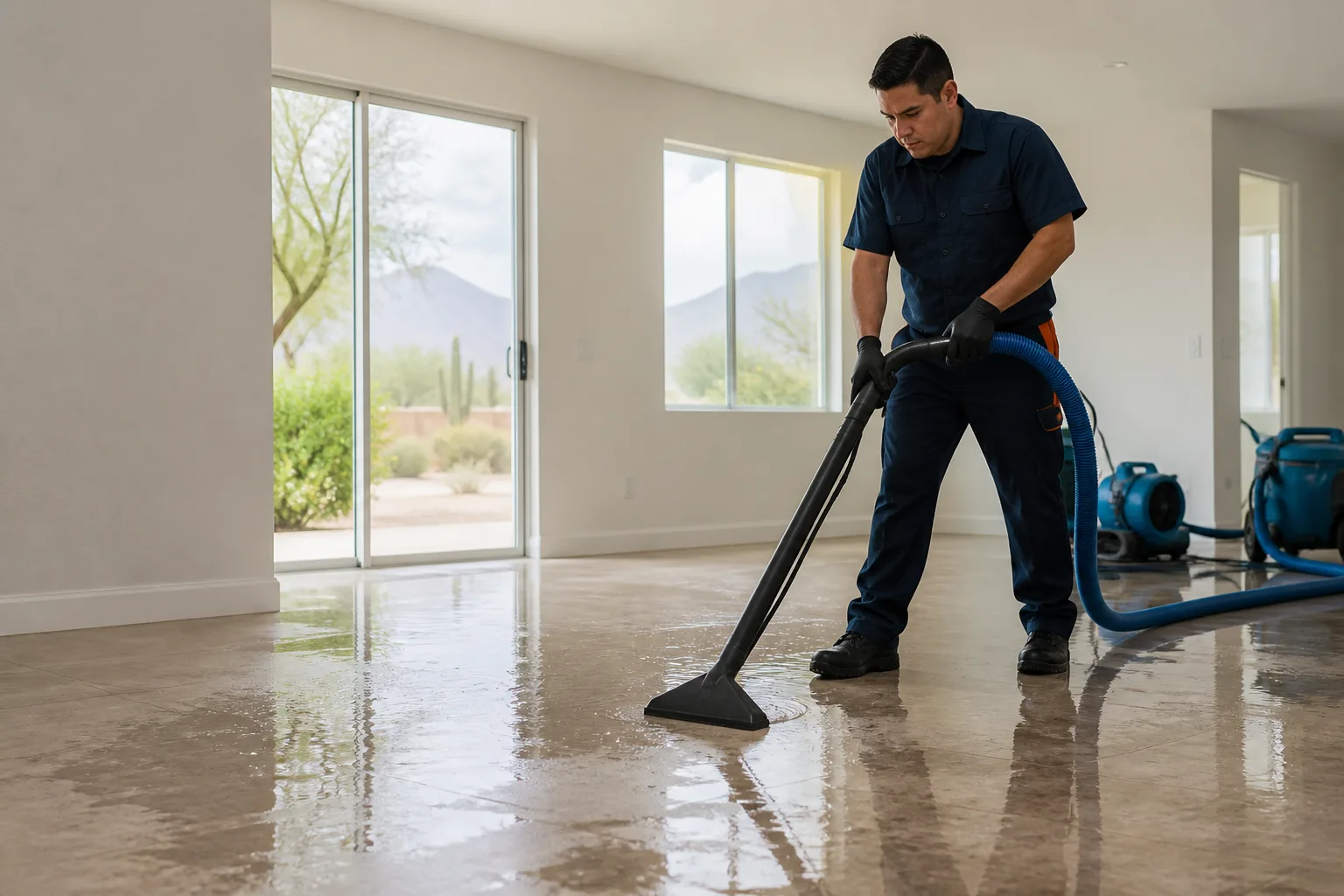
Kitchen Water Damage requires evaluation of the material, water source, contamination and how far moisture has traveled beyond the visible mark.
How this damage develops
Kitchen water damage often begins at sink plumbing, dishwashers, refrigerator lines or supply valves. Cabinet bases, toe-kicks and continuous finished flooring can conceal migration across a wide run.
Signs that deserve closer inspection
- Swollen particleboard at the sink base or dishwasher opening.
- Loose flooring or dark joints along cabinet toe-kicks.
- Moisture behind the refrigerator or below the ice-maker valve.
- Staining on the ceiling beneath the kitchen.
What changes the restoration scope?
The visible mark is only one piece of evidence. Source behavior, construction and access determine where inspection and drying need to continue.
- Cabinet construction. Composite boxes lose strength after absorption and may block drying access.
- Appliance connections. Leaks can be intermittent and tied to cycle operation.
- Floor continuity. Water can travel beneath several cabinets without an exposed edge.
Limits and material decisions
Drying the open floor does not establish that cabinet bases and underlayment are dry. Appliance removal and reconnection may require qualified trades.
A practical response sequence
- Stop the specific fixture or appliance
Close its valve when safely accessible.
- Remove stored contents
Create access without spreading wet items.
- Inspect the entire cabinet run
Check toe-kicks, side panels and floor layers.
- Coordinate repair, drying and cabinet decisions
Base removal on condition and access needs.
Extraction, drying and repair are separate decisions
Extraction removes accessible liquid water. Structural drying addresses retained moisture in the assembly. Repair follows only after the source is corrected and affected materials have been evaluated for condition, contamination and moisture.
Related services and guidance
Moisture Detection
Moisture detection helps locate water migration behind finishes and beneath flooring so the drying plan covers the actual affected area.
Learn more→Structural Drying
Structural drying reduces moisture retained in drywall, framing, subfloors and other building materials after bulk water is removed.
Learn more→Water Damage Restoration Services in Green Valley, AZ
Water damage restoration removes unwanted water, identifies affected materials and supports controlled drying after leaks, flooding or plumbing failures.
Learn moreFrequently asked questions
How does kitchen water damage develop?
Kitchen water damage often begins at sink plumbing, dishwashers, refrigerator lines or supply valves. Cabinet bases, toe-kicks and continuous finished flooring can conceal migration across a wide run.
What are common signs of kitchen water damage?
Look for swollen particleboard at the sink base or dishwasher opening; loose flooring or dark joints along cabinet toe-kicks; moisture behind the refrigerator or below the ice-maker valve.
What factors change the restoration scope?
Cabinet construction: Composite boxes lose strength after absorption and may block drying access. Appliance connections: Leaks can be intermittent and tied to cycle operation. Floor continuity: Water can travel beneath several cabinets without an exposed edge.
What should property owners avoid?
Drying the open floor does not establish that cabinet bases and underlayment are dry. Appliance removal and reconnection may require qualified trades.
Need help with water damage?
Describe the source, affected rooms and when the problem began.