Hardwood Floor Water Damage
Hardwood Floor Water Damage requires evaluation of the material, water source, contamination and how far moisture has traveled beyond the visible mark.
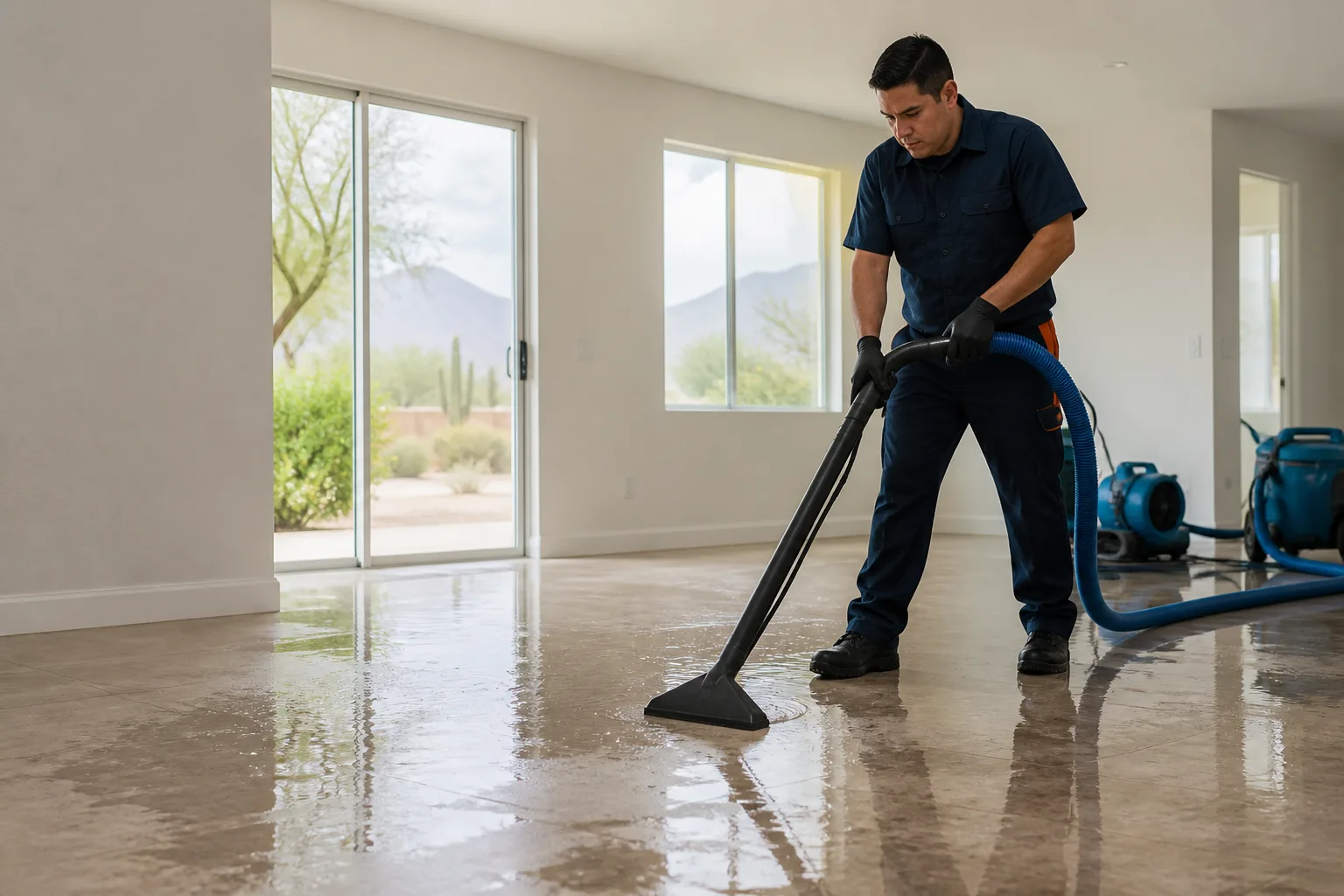
Hardwood Floor Water Damage requires evaluation of the material, water source, contamination and how far moisture has traveled beyond the visible mark.
How this damage develops
Hardwood absorbs water at board edges, end grain and the unfinished underside. Moisture differences across the board thickness cause cupping, crowning or gaps, and water can remain between the flooring and subfloor.
Signs that deserve closer inspection
- Board edges rise above the center, creating cupping.
- Dark joints, finish haze or new squeaks.
- Moisture readings higher than unaffected rooms.
- Buckling or boards lifting from the substrate.
What changes the restoration scope?
The visible mark is only one piece of evidence. Source behavior, construction and access determine where inspection and drying need to continue.
- Floor construction. Solid, engineered and floating products respond differently.
- Subfloor. Drying the board surface does not confirm the layer below.
- Finish permeability. Surface coatings slow upward evaporation.
Limits and material decisions
Rapid heat or uncontrolled drying can worsen distortion. Some staining, delamination or fastener release remains after moisture is reduced and requires flooring evaluation.
A practical response sequence
- Remove standing water
Extract without forcing water deeper into joints.
- Map boards and reference areas
Record repeat readings in consistent locations.
- Dry both flooring and subfloor
Use controlled conditions suited to the assembly.
- Allow stabilization before repair
Do not sand or replace boards while moisture is changing.
Extraction, drying and repair are separate decisions
Extraction removes accessible liquid water. Structural drying addresses retained moisture in the assembly. Repair follows only after the source is corrected and affected materials have been evaluated for condition, contamination and moisture.
Related services and guidance
Moisture Detection
Moisture detection helps locate water migration behind finishes and beneath flooring so the drying plan covers the actual affected area.
Learn more→Structural Drying
Structural drying reduces moisture retained in drywall, framing, subfloors and other building materials after bulk water is removed.
Learn more→Water Damage Restoration Services in Green Valley, AZ
Water damage restoration removes unwanted water, identifies affected materials and supports controlled drying after leaks, flooding or plumbing failures.
Learn moreFrequently asked questions
How does hardwood floor water damage develop?
Hardwood absorbs water at board edges, end grain and the unfinished underside. Moisture differences across the board thickness cause cupping, crowning or gaps, and water can remain between the flooring and subfloor.
What are common signs of hardwood floor water damage?
Look for board edges rise above the center, creating cupping; dark joints, finish haze or new squeaks; moisture readings higher than unaffected rooms.
What factors change the restoration scope?
Floor construction: Solid, engineered and floating products respond differently. Subfloor: Drying the board surface does not confirm the layer below. Finish permeability: Surface coatings slow upward evaporation.
What should property owners avoid?
Rapid heat or uncontrolled drying can worsen distortion. Some staining, delamination or fastener release remains after moisture is reduced and requires flooring evaluation.
Need help with water damage?
Describe the source, affected rooms and when the problem began.