Ceiling Water Damage
Ceiling Water Damage requires evaluation of the material, water source, contamination and how far moisture has traveled beyond the visible mark.
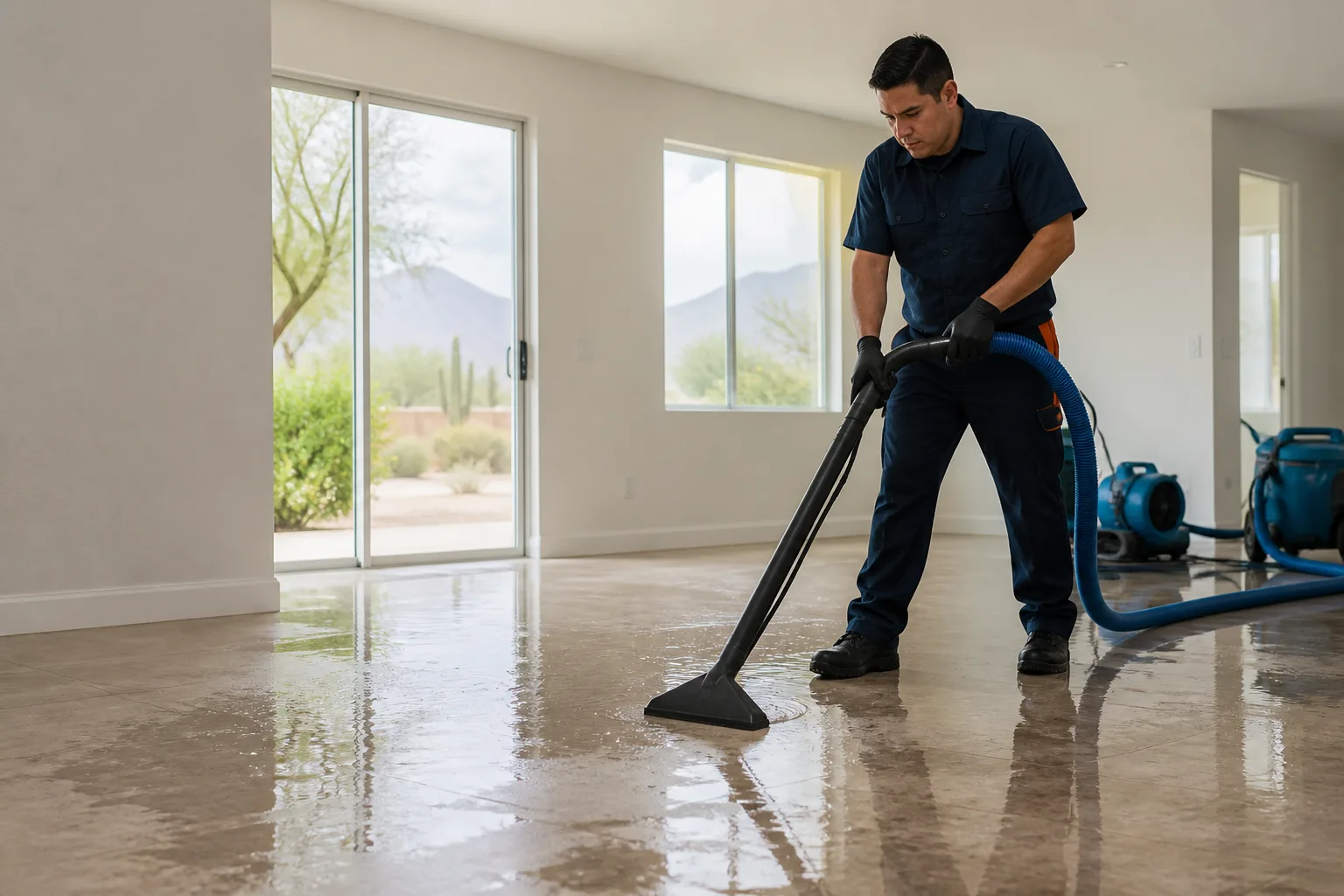
Ceiling Water Damage requires evaluation of the material, water source, contamination and how far moisture has traveled beyond the visible mark.
How this damage develops
Ceiling materials become wet from plumbing above, roof intrusion, HVAC condensate or water migrating from an upper floor. Gypsum facing can hide saturation until seams discolor, fasteners show or the panel begins to sag.
Signs that deserve closer inspection
- A growing brown ring, soft paint or blistered finish.
- Sagging panels or water collecting near a light fixture.
- Damp insulation above the visible mark.
- Cracking tape joints after a wetting event.
What changes the restoration scope?
The visible mark is only one piece of evidence. Source behavior, construction and access determine where inspection and drying need to continue.
- Weight and stability. Water-loaded gypsum can release from fasteners without warning.
- Insulation. Wet insulation holds moisture against the back of the ceiling.
- Electrical fixtures. Recessed lights and wiring require a strict keep-clear boundary.
Limits and material decisions
Painting a dry-looking stain can hide an active source. Do not stand beneath a bulging ceiling or puncture it to release water.
A practical response sequence
- Clear the room below
Move people and belongings away from sagging material.
- Avoid electrical controls
Do not use affected fixtures or switches.
- Inspect from above when safe
Check the source, insulation and framing path.
- Dry before refinishing
Verify the ceiling and adjoining materials before repair.
Extraction, drying and repair are separate decisions
Extraction removes accessible liquid water. Structural drying addresses retained moisture in the assembly. Repair follows only after the source is corrected and affected materials have been evaluated for condition, contamination and moisture.
Related services and guidance
Moisture Detection
Moisture detection helps locate water migration behind finishes and beneath flooring so the drying plan covers the actual affected area.
Learn more→Structural Drying
Structural drying reduces moisture retained in drywall, framing, subfloors and other building materials after bulk water is removed.
Learn more→Water Damage Restoration Services in Green Valley, AZ
Water damage restoration removes unwanted water, identifies affected materials and supports controlled drying after leaks, flooding or plumbing failures.
Learn moreFrequently asked questions
How does ceiling water damage develop?
Ceiling materials become wet from plumbing above, roof intrusion, HVAC condensate or water migrating from an upper floor. Gypsum facing can hide saturation until seams discolor, fasteners show or the panel begins to sag.
What are common signs of ceiling water damage?
Look for a growing brown ring, soft paint or blistered finish; sagging panels or water collecting near a light fixture; damp insulation above the visible mark.
What factors change the restoration scope?
Weight and stability: Water-loaded gypsum can release from fasteners without warning. Insulation: Wet insulation holds moisture against the back of the ceiling. Electrical fixtures: Recessed lights and wiring require a strict keep-clear boundary.
What should property owners avoid?
Painting a dry-looking stain can hide an active source. Do not stand beneath a bulging ceiling or puncture it to release water.
Need help with water damage?
Describe the source, affected rooms and when the problem began.