Bathroom Water Damage
Bathroom Water Damage requires evaluation of the material, water source, contamination and how far moisture has traveled beyond the visible mark.
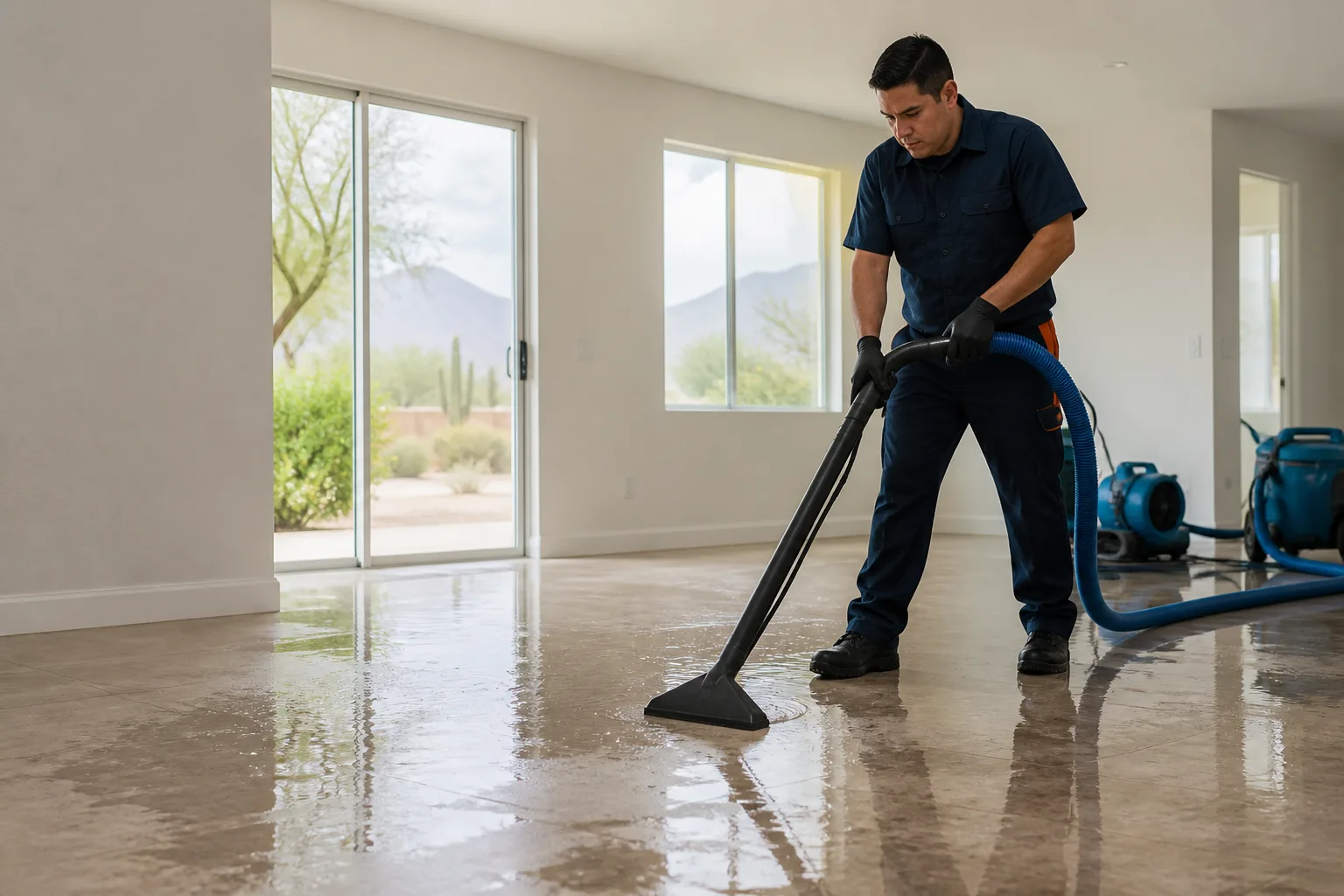
Bathroom Water Damage requires evaluation of the material, water source, contamination and how far moisture has traveled beyond the visible mark.
How this damage develops
Bathrooms combine pressurized supplies, drains, toilet seals, shower pans and frequent surface water. Tile can hide wet backer board or subfloor, while small repeated leaks damage cabinets and walls over time.
Signs that deserve closer inspection
- Loose tile, cracked grout or soft flooring near a fixture.
- Swollen vanity panels or moisture inside the sink base.
- Staining at the ceiling below the bathroom.
- Recurring odor after shower or toilet use.
What changes the restoration scope?
The visible mark is only one piece of evidence. Source behavior, construction and access determine where inspection and drying need to continue.
- Fixture timing. When water appears helps separate supply, drain and enclosure failures.
- Waterproofing. Grout is not the primary waterproof layer in a shower assembly.
- Penetrations. Toilet, tub and pipe openings allow water into the subfloor.
Limits and material decisions
Resealing grout does not repair a failed pan, drain or toilet flange. Destructive testing should follow plumbing and moisture evidence rather than guesswork.
A practical response sequence
- Stop using the suspect fixture
Avoid repeating the leak to test it casually.
- Observe fixture-specific patterns
Record whether water follows flushing, filling or showering.
- Inspect below and beside
Check vanity, baseboard, subfloor and lower-level ceiling.
- Repair the assembly before refinishing
Confirm source correction and drying first.
Extraction, drying and repair are separate decisions
Extraction removes accessible liquid water. Structural drying addresses retained moisture in the assembly. Repair follows only after the source is corrected and affected materials have been evaluated for condition, contamination and moisture.
Related services and guidance
Moisture Detection
Moisture detection helps locate water migration behind finishes and beneath flooring so the drying plan covers the actual affected area.
Learn more→Structural Drying
Structural drying reduces moisture retained in drywall, framing, subfloors and other building materials after bulk water is removed.
Learn more→Water Damage Restoration Services in Green Valley, AZ
Water damage restoration removes unwanted water, identifies affected materials and supports controlled drying after leaks, flooding or plumbing failures.
Learn moreFrequently asked questions
How does bathroom water damage develop?
Bathrooms combine pressurized supplies, drains, toilet seals, shower pans and frequent surface water. Tile can hide wet backer board or subfloor, while small repeated leaks damage cabinets and walls over time.
What are common signs of bathroom water damage?
Look for loose tile, cracked grout or soft flooring near a fixture; swollen vanity panels or moisture inside the sink base; staining at the ceiling below the bathroom.
What factors change the restoration scope?
Fixture timing: When water appears helps separate supply, drain and enclosure failures. Waterproofing: Grout is not the primary waterproof layer in a shower assembly. Penetrations: Toilet, tub and pipe openings allow water into the subfloor.
What should property owners avoid?
Resealing grout does not repair a failed pan, drain or toilet flange. Destructive testing should follow plumbing and moisture evidence rather than guesswork.
Need help with water damage?
Describe the source, affected rooms and when the problem began.