Water Heater Leak Damage
Water Heater Leak Damage can release water into finishes, flooring and concealed cavities. The response should address the source, affected materials and the full moisture path.
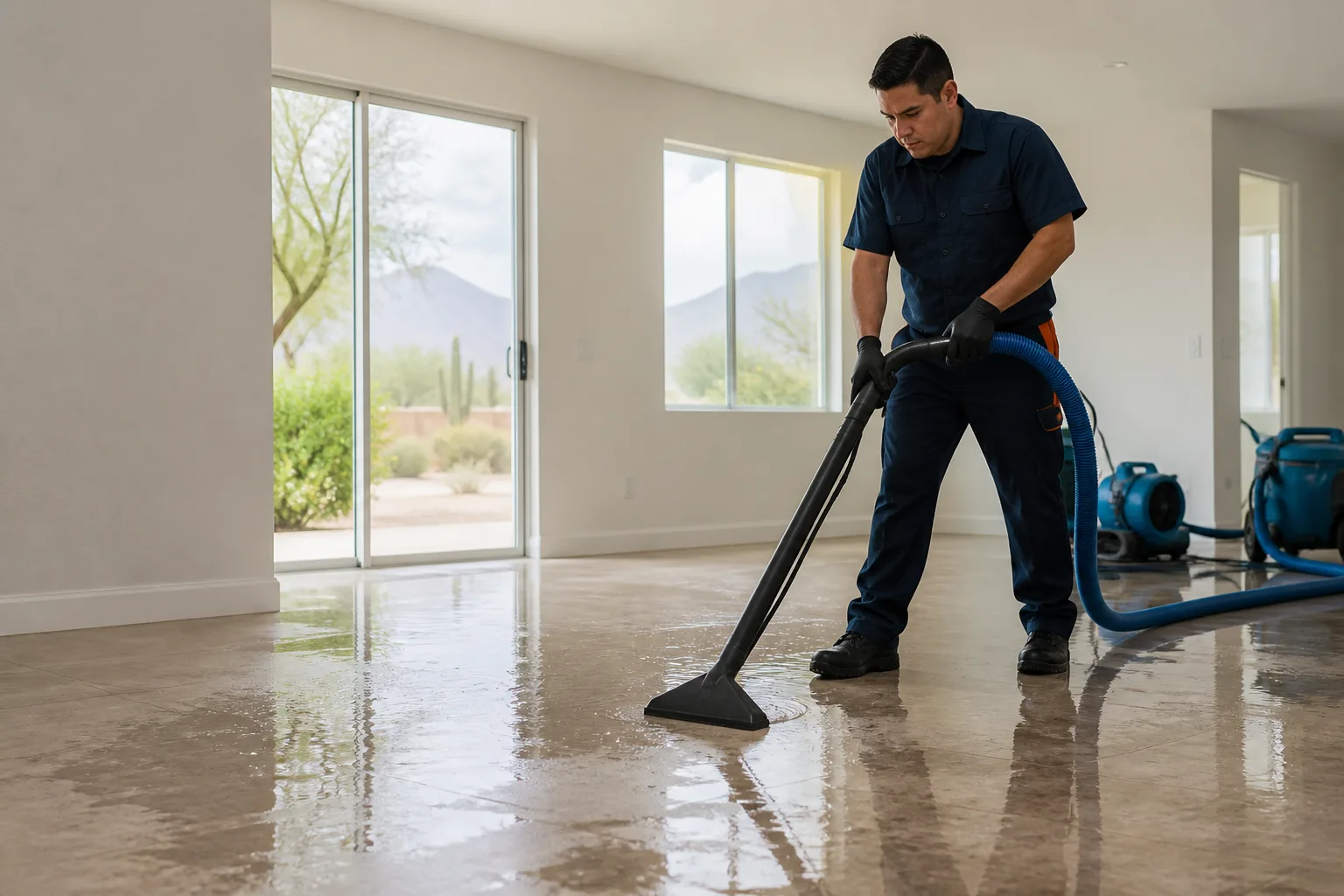
Water Heater Leak Damage can release water into finishes, flooring and concealed cavities. The response should address the source, affected materials and the full moisture path.
How this damage develops
A failed tank, temperature-pressure valve, drain valve or connector can release hot or cold water into a garage, closet or interior utility area. Tank failures can discharge the stored volume quickly while the supply continues refilling it.
Signs that deserve closer inspection
- Water collecting beneath the tank or inside its drain pan.
- Rust trails, corrosion or damp insulation around the jacket.
- Dripping at the relief pipe, valve or flexible connector.
- Moisture entering nearby drywall, platform framing or flooring.
What changes the restoration scope?
The visible mark is only one piece of evidence. Source behavior, construction and access determine where inspection and drying need to continue.
- Tank versus fitting. A leaking connector may be repairable; a compromised tank often needs replacement.
- Platform construction. Elevated heaters can saturate plywood, drywall and framing below.
- Hot water. Temperature creates a burn risk and can accelerate material effects.
Limits and material decisions
Restoration equipment does not make a damaged water heater safe to operate. Gas, electrical and pressure components must be handled by qualified trades.
A practical response sequence
- Avoid hot water contact
Keep clear of active discharge and steam.
- Shut water and energy safely
Use accessible controls without performing hazardous work.
- Inspect the drain path
Check the pan, platform and adjoining room.
- Separate replacement from drying
Coordinate the appliance trade before reconstruction.
Extraction, drying and repair are separate decisions
Extraction removes accessible liquid water. Structural drying addresses retained moisture in the assembly. Repair follows only after the source is corrected and affected materials have been evaluated for condition, contamination and moisture.
Related services and guidance
Emergency Water Damage Help
A sudden leak or overflow requires a safe, organized response. Avoid wet areas where electricity may be present and do not handle contaminated water.
Learn more→Water Extraction & Water Removal
Water extraction uses pumps and professional vacuum equipment to remove standing water from floors, carpets and accessible cavities.
Learn more→Structural Drying
Structural drying reduces moisture retained in drywall, framing, subfloors and other building materials after bulk water is removed.
Learn moreFrequently asked questions
How does water heater leak damage develop?
A failed tank, temperature-pressure valve, drain valve or connector can release hot or cold water into a garage, closet or interior utility area. Tank failures can discharge the stored volume quickly while the supply continues refilling it.
What are common signs of water heater leak damage?
Look for water collecting beneath the tank or inside its drain pan; rust trails, corrosion or damp insulation around the jacket; dripping at the relief pipe, valve or flexible connector.
What factors change the restoration scope?
Tank versus fitting: A leaking connector may be repairable; a compromised tank often needs replacement. Platform construction: Elevated heaters can saturate plywood, drywall and framing below. Hot water: Temperature creates a burn risk and can accelerate material effects.
What should property owners avoid?
Restoration equipment does not make a damaged water heater safe to operate. Gas, electrical and pressure components must be handled by qualified trades.
Need help with water damage?
Describe the source, affected rooms and when the problem began.