Toilet Overflow Cleanup
Toilet Overflow Cleanup can release water into finishes, flooring and concealed cavities. The response should address the source, affected materials and the full moisture path.
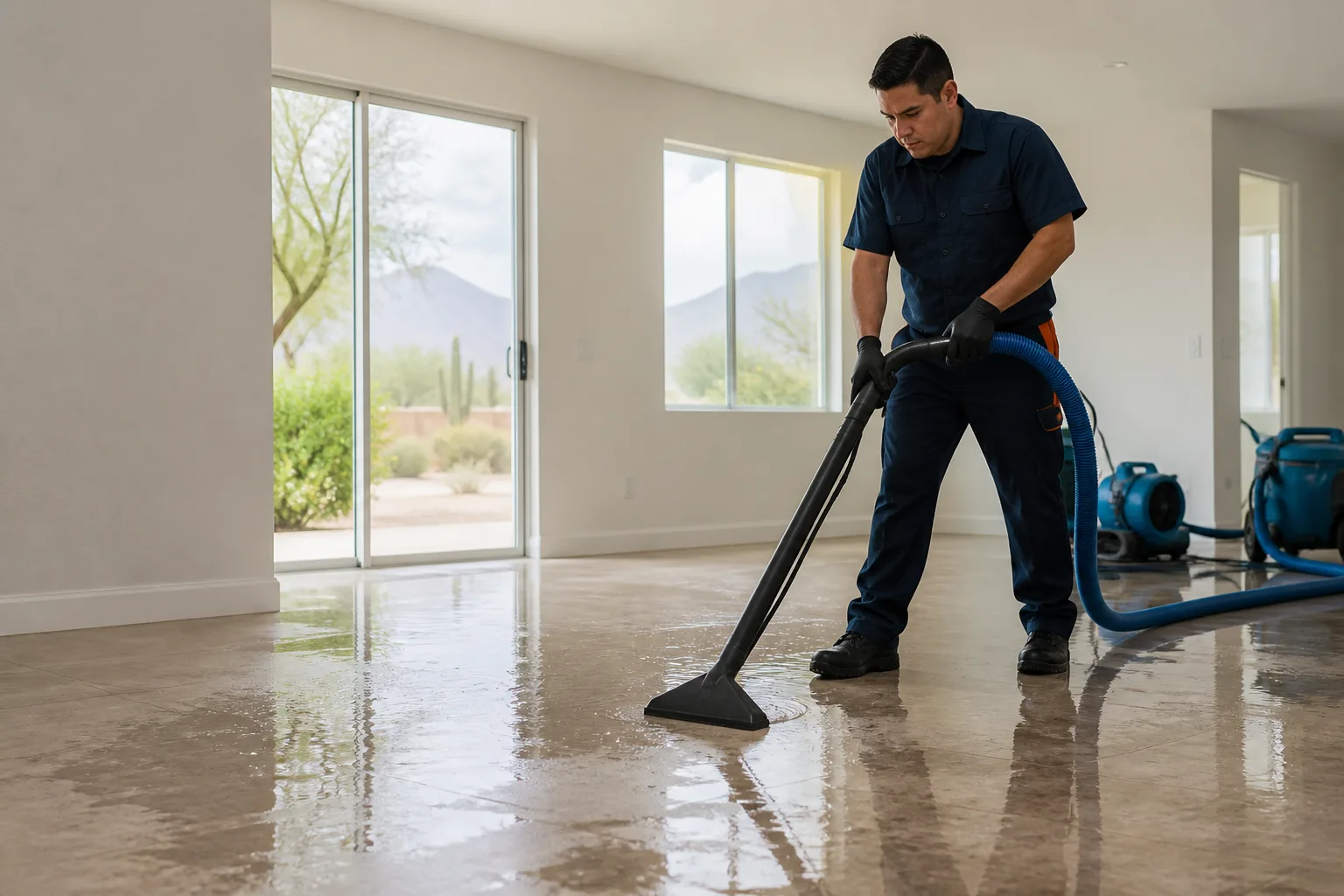
Toilet Overflow Cleanup can release water into finishes, flooring and concealed cavities. The response should address the source, affected materials and the full moisture path.
How this damage develops
A toilet overflow can involve supply water, bowl contents or sewage backing through the fixture. The sanitary condition depends on the source and what the water contacted—not merely how clear it looks.
Signs that deserve closer inspection
- Water around the toilet base or flowing from the bowl rim.
- Repeated bowl rise when another fixture drains.
- Moisture at the ceiling below an upstairs bathroom.
- Odor or residue extending into grout, baseboard or flooring seams.
What changes the restoration scope?
The visible mark is only one piece of evidence. Source behavior, construction and access determine where inspection and drying need to continue.
- Overflow source. A blocked bowl differs from a building drain or sewer backup.
- Floor assembly. Water can pass through grout, vinyl seams and toilet penetrations.
- Porous finishes. Carpet, pad, drywall and trim may not be suitable for simple surface cleaning.
Limits and material decisions
Household disinfectant cannot reliably address water trapped beneath flooring or inside a contaminated wall cavity. Repeated backup requires plumbing or sewer diagnosis.
A practical response sequence
- Stop fixture use
Do not flush again or run connected drains.
- Keep occupants away
Treat unknown overflow water as contaminated.
- Protect adjacent rooms
Prevent foot traffic from spreading residue.
- Set a controlled cleanup scope
Inspect flooring layers, baseboards and the level below.
Extraction, drying and repair are separate decisions
Extraction removes accessible liquid water. Structural drying addresses retained moisture in the assembly. Repair follows only after the source is corrected and affected materials have been evaluated for condition, contamination and moisture.
Related services and guidance
Emergency Water Damage Help
A sudden leak or overflow requires a safe, organized response. Avoid wet areas where electricity may be present and do not handle contaminated water.
Learn more→Water Extraction & Water Removal
Water extraction uses pumps and professional vacuum equipment to remove standing water from floors, carpets and accessible cavities.
Learn more→Structural Drying
Structural drying reduces moisture retained in drywall, framing, subfloors and other building materials after bulk water is removed.
Learn moreFrequently asked questions
How does toilet overflow cleanup develop?
A toilet overflow can involve supply water, bowl contents or sewage backing through the fixture. The sanitary condition depends on the source and what the water contacted—not merely how clear it looks.
What are common signs of toilet overflow cleanup?
Look for water around the toilet base or flowing from the bowl rim; repeated bowl rise when another fixture drains; moisture at the ceiling below an upstairs bathroom.
What factors change the restoration scope?
Overflow source: A blocked bowl differs from a building drain or sewer backup. Floor assembly: Water can pass through grout, vinyl seams and toilet penetrations. Porous finishes: Carpet, pad, drywall and trim may not be suitable for simple surface cleaning.
What should property owners avoid?
Household disinfectant cannot reliably address water trapped beneath flooring or inside a contaminated wall cavity. Repeated backup requires plumbing or sewer diagnosis.
Need help with water damage?
Describe the source, affected rooms and when the problem began.