Roof Leak Water Damage
Roof Leak Water Damage can release water into finishes, flooring and concealed cavities. The response should address the source, affected materials and the full moisture path.
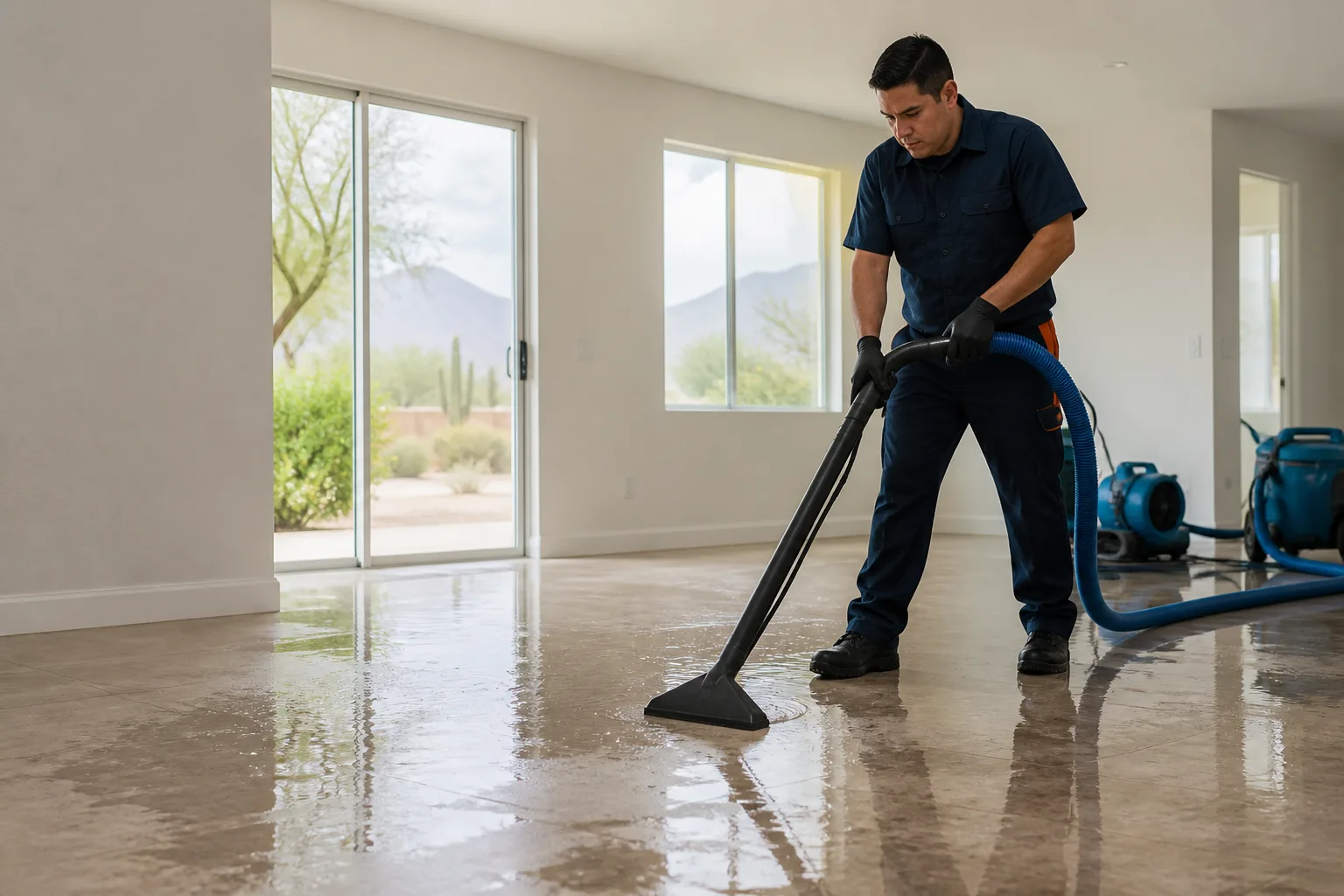
Roof Leak Water Damage can release water into finishes, flooring and concealed cavities. The response should address the source, affected materials and the full moisture path.
How this damage develops
Roof water enters through damaged covering, flashing, penetrations or drainage defects, then follows decking, rafters and insulation before appearing indoors. The visible ceiling stain rarely identifies the exact exterior entry point.
Signs that deserve closer inspection
- Ceiling stains that enlarge after rain.
- Damp insulation or dark roof decking in an accessible attic.
- Water near vents, skylights, chimneys or roof-wall intersections.
- Peeling paint or swollen drywall high on an exterior wall.
What changes the restoration scope?
The visible mark is only one piece of evidence. Source behavior, construction and access determine where inspection and drying need to continue.
- Weather pattern. Wind direction and rainfall intensity can change where intrusion occurs.
- Attic path. Water may travel along framing before dripping into a room.
- Insulation load. Wet insulation spreads moisture and slows ceiling drying.
Limits and material decisions
Interior drying cannot correct failed roofing. Roof access during wet, windy or storm conditions is hazardous and should be handled by qualified professionals.
A practical response sequence
- Protect the room below
Keep occupants away from sagging ceilings and electrical fixtures.
- Record weather conditions
Note when and under what rain pattern the leak appears.
- Inspect attic safely
Trace staining without stepping on unsupported ceiling material.
- Coordinate roof repair and drying
Confirm exterior correction before closing the assembly.
Extraction, drying and repair are separate decisions
Extraction removes accessible liquid water. Structural drying addresses retained moisture in the assembly. Repair follows only after the source is corrected and affected materials have been evaluated for condition, contamination and moisture.
Related services and guidance
Emergency Water Damage Help
A sudden leak or overflow requires a safe, organized response. Avoid wet areas where electricity may be present and do not handle contaminated water.
Learn more→Water Extraction & Water Removal
Water extraction uses pumps and professional vacuum equipment to remove standing water from floors, carpets and accessible cavities.
Learn more→Structural Drying
Structural drying reduces moisture retained in drywall, framing, subfloors and other building materials after bulk water is removed.
Learn moreFrequently asked questions
How does roof leak water damage develop?
Roof water enters through damaged covering, flashing, penetrations or drainage defects, then follows decking, rafters and insulation before appearing indoors. The visible ceiling stain rarely identifies the exact exterior entry point.
What are common signs of roof leak water damage?
Look for ceiling stains that enlarge after rain; damp insulation or dark roof decking in an accessible attic; water near vents, skylights, chimneys or roof-wall intersections.
What factors change the restoration scope?
Weather pattern: Wind direction and rainfall intensity can change where intrusion occurs. Attic path: Water may travel along framing before dripping into a room. Insulation load: Wet insulation spreads moisture and slows ceiling drying.
What should property owners avoid?
Interior drying cannot correct failed roofing. Roof access during wet, windy or storm conditions is hazardous and should be handled by qualified professionals.
Need help with water damage?
Describe the source, affected rooms and when the problem began.