Plumbing Leak Water Damage
Plumbing Leak Water Damage can release water into finishes, flooring and concealed cavities. The response should address the source, affected materials and the full moisture path.
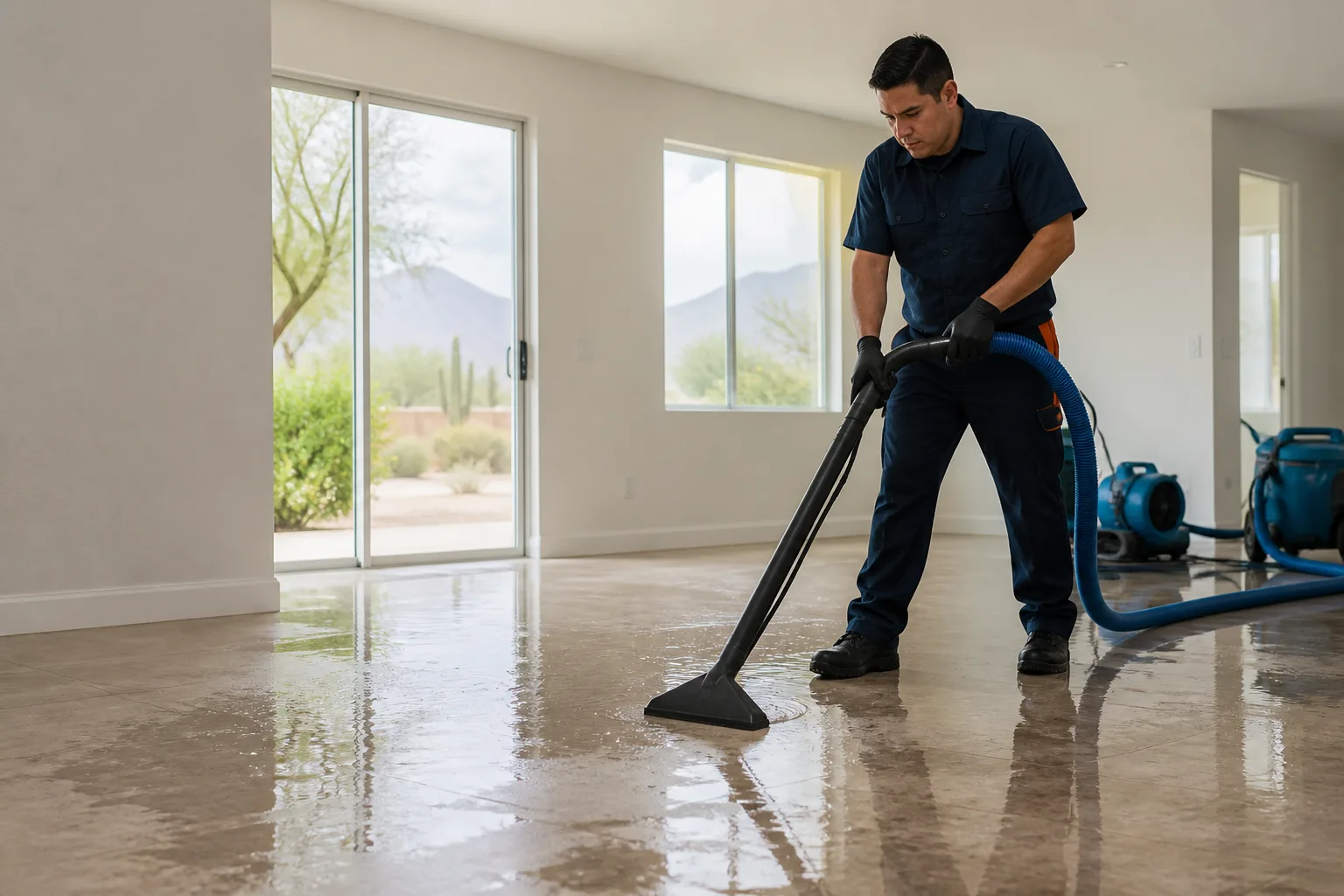
Plumbing Leak Water Damage can release water into finishes, flooring and concealed cavities. The response should address the source, affected materials and the full moisture path.
How this damage develops
A plumbing leak may release water slowly from a fitting, drain, supply line or concealed joint. Slow leaks often follow framing or pipe penetrations, so the stain can appear away from the failed connection.
Signs that deserve closer inspection
- Recurring cabinet moisture or mineral residue around fittings.
- Soft drywall, peeling paint or swollen baseboard near plumbing routes.
- Water-meter movement while fixtures are off.
- Musty odor inside a vanity, wall or utility chase.
What changes the restoration scope?
The visible mark is only one piece of evidence. Source behavior, construction and access determine where inspection and drying need to continue.
- Supply versus drain. Pressurized lines leak continuously; drains leak mainly when fixtures run.
- Leak history. Repeated wetting can weaken finishes and support microbial growth.
- Concealed route. Pipe chases and wall plates can direct water into adjacent rooms.
Limits and material decisions
Drying the visible stain without repairing the fitting allows damage to return. Leak detection may require plumbing access that restoration moisture meters alone cannot provide.
A practical response sequence
- Test when the leak appears
Note whether it follows fixture use or continues constantly.
- Shut down the affected fixture
Avoid operating it until the source is assessed.
- Inspect connected cabinets and walls
Follow gravity and the pipe route.
- Coordinate repair and drying
Confirm source repair before closing finishes.
Extraction, drying and repair are separate decisions
Extraction removes accessible liquid water. Structural drying addresses retained moisture in the assembly. Repair follows only after the source is corrected and affected materials have been evaluated for condition, contamination and moisture.
Related services and guidance
Emergency Water Damage Help
A sudden leak or overflow requires a safe, organized response. Avoid wet areas where electricity may be present and do not handle contaminated water.
Learn more→Water Extraction & Water Removal
Water extraction uses pumps and professional vacuum equipment to remove standing water from floors, carpets and accessible cavities.
Learn more→Structural Drying
Structural drying reduces moisture retained in drywall, framing, subfloors and other building materials after bulk water is removed.
Learn moreFrequently asked questions
How does plumbing leak water damage develop?
A plumbing leak may release water slowly from a fitting, drain, supply line or concealed joint. Slow leaks often follow framing or pipe penetrations, so the stain can appear away from the failed connection.
What are common signs of plumbing leak water damage?
Look for recurring cabinet moisture or mineral residue around fittings; soft drywall, peeling paint or swollen baseboard near plumbing routes; water-meter movement while fixtures are off.
What factors change the restoration scope?
Supply versus drain: Pressurized lines leak continuously; drains leak mainly when fixtures run. Leak history: Repeated wetting can weaken finishes and support microbial growth. Concealed route: Pipe chases and wall plates can direct water into adjacent rooms.
What should property owners avoid?
Drying the visible stain without repairing the fitting allows damage to return. Leak detection may require plumbing access that restoration moisture meters alone cannot provide.
Need help with water damage?
Describe the source, affected rooms and when the problem began.