Dishwasher Leak Damage
Dishwasher Leak Damage can release water into finishes, flooring and concealed cavities. The response should address the source, affected materials and the full moisture path.
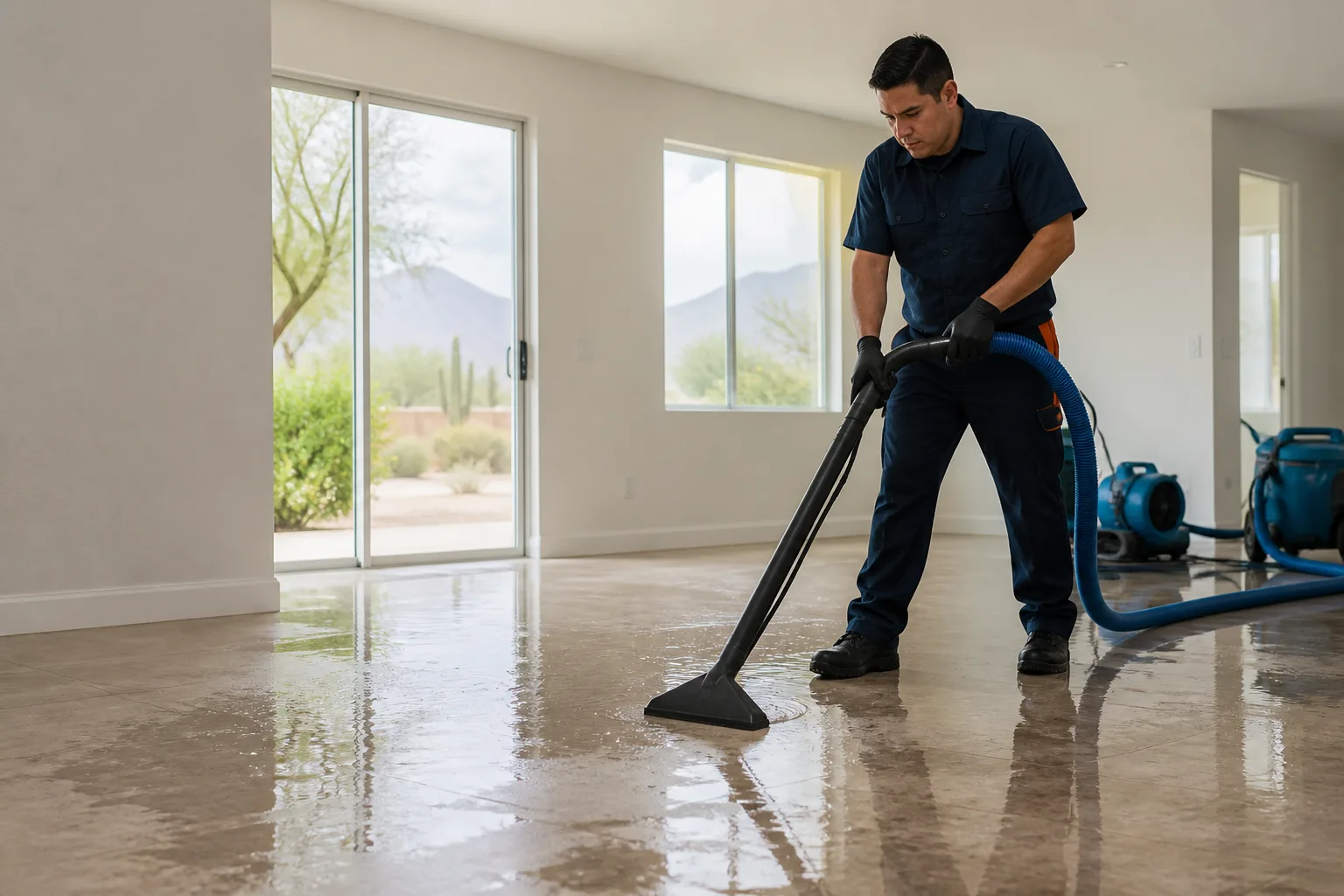
Dishwasher Leak Damage can release water into finishes, flooring and concealed cavities. The response should address the source, affected materials and the full moisture path.
How this damage develops
Dishwasher water can escape from the inlet, drain hose, pump, door gasket or tub. Cabinet toe-kicks often hide the first signs, allowing water to track beneath finished flooring and adjoining cabinets.
Signs that deserve closer inspection
- Water at the toe-kick during or after a cycle.
- Swollen cabinet sides or damaged flooring beside the unit.
- A damp or musty odor inside the sink base.
- Leak evidence at the ceiling below the kitchen.
What changes the restoration scope?
The visible mark is only one piece of evidence. Source behavior, construction and access determine where inspection and drying need to continue.
- Cycle phase. Fill, wash and drain leaks point to different components.
- Cabinet run. Water can travel behind toe-kicks across multiple cabinet boxes.
- Finished floor. Floating or wood floors may trap moisture below the wear surface.
Limits and material decisions
Cleaning the front edge does not address water beneath cabinets. Pulling a built-in appliance involves electrical, plumbing and countertop-clearance risks.
A practical response sequence
- Cancel appliance use
Do not start another cycle.
- Close the supply valve
Use the sink-base shutoff when accessible and dry.
- Inspect the full cabinet run
Check toe-kicks, sink base and flooring seams.
- Coordinate appliance repair
Verify the source before reinstalling finishes.
Extraction, drying and repair are separate decisions
Extraction removes accessible liquid water. Structural drying addresses retained moisture in the assembly. Repair follows only after the source is corrected and affected materials have been evaluated for condition, contamination and moisture.
Related services and guidance
Emergency Water Damage Help
A sudden leak or overflow requires a safe, organized response. Avoid wet areas where electricity may be present and do not handle contaminated water.
Learn more→Water Extraction & Water Removal
Water extraction uses pumps and professional vacuum equipment to remove standing water from floors, carpets and accessible cavities.
Learn more→Structural Drying
Structural drying reduces moisture retained in drywall, framing, subfloors and other building materials after bulk water is removed.
Learn moreFrequently asked questions
How does dishwasher leak damage develop?
Dishwasher water can escape from the inlet, drain hose, pump, door gasket or tub. Cabinet toe-kicks often hide the first signs, allowing water to track beneath finished flooring and adjoining cabinets.
What are common signs of dishwasher leak damage?
Look for water at the toe-kick during or after a cycle; swollen cabinet sides or damaged flooring beside the unit; a damp or musty odor inside the sink base.
What factors change the restoration scope?
Cycle phase: Fill, wash and drain leaks point to different components. Cabinet run: Water can travel behind toe-kicks across multiple cabinet boxes. Finished floor: Floating or wood floors may trap moisture below the wear surface.
What should property owners avoid?
Cleaning the front edge does not address water beneath cabinets. Pulling a built-in appliance involves electrical, plumbing and countertop-clearance risks.
Need help with water damage?
Describe the source, affected rooms and when the problem began.