Burst Pipe Water Damage
Burst Pipe Water Damage can release water into finishes, flooring and concealed cavities. The response should address the source, affected materials and the full moisture path.
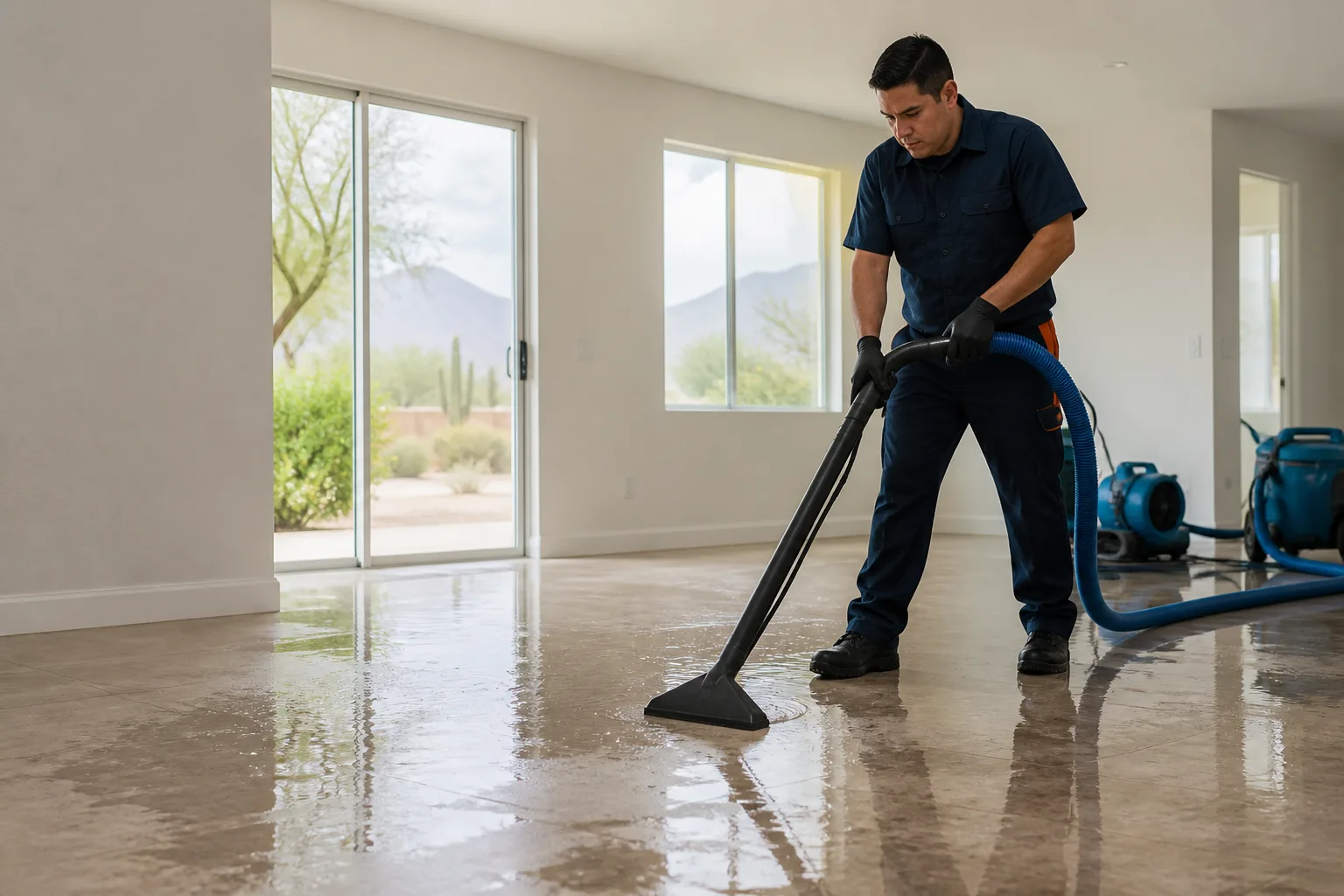
Burst Pipe Water Damage can release water into finishes, flooring and concealed cavities. The response should address the source, affected materials and the full moisture path.
How this damage develops
A pressurized pipe rupture can discharge a large volume before the main or branch valve is closed. Water may cross rooms, descend through wall plates and reach lower floors far from the split pipe.
Signs that deserve closer inspection
- A sudden loss of water pressure or sound of running water with fixtures closed.
- Wet drywall seams, baseboards or flooring along the pipe route.
- Ceiling dripping below an upstairs supply line.
- Water appearing in more than one connected room.
What changes the restoration scope?
The visible mark is only one piece of evidence. Source behavior, construction and access determine where inspection and drying need to continue.
- Pipe location. A rupture inside a wall or ceiling requires inspection beyond the first visible opening.
- Release duration. Pressure and time determine how widely water spreads.
- Insulation. Wet cavity insulation can retain water against framing and drywall.
Limits and material decisions
Closing the main stops new water but does not dry the building. Frozen, corroded or mechanically damaged piping requires a qualified plumbing repair separate from restoration.
A practical response sequence
- Keep clear of electrical hazards
Do not cross standing water to reach a shutoff.
- Stop the supply
Use the main or correct branch valve when safely accessible.
- Record the rupture path
Photograph the failed area and every affected room.
- Extract and inspect below
Check wall cavities, floors and levels beneath the break.
Extraction, drying and repair are separate decisions
Extraction removes accessible liquid water. Structural drying addresses retained moisture in the assembly. Repair follows only after the source is corrected and affected materials have been evaluated for condition, contamination and moisture.
Related services and guidance
Emergency Water Damage Help
A sudden leak or overflow requires a safe, organized response. Avoid wet areas where electricity may be present and do not handle contaminated water.
Learn more→Water Extraction & Water Removal
Water extraction uses pumps and professional vacuum equipment to remove standing water from floors, carpets and accessible cavities.
Learn more→Structural Drying
Structural drying reduces moisture retained in drywall, framing, subfloors and other building materials after bulk water is removed.
Learn moreFrequently asked questions
How does burst pipe water damage develop?
A pressurized pipe rupture can discharge a large volume before the main or branch valve is closed. Water may cross rooms, descend through wall plates and reach lower floors far from the split pipe.
What are common signs of burst pipe water damage?
Look for a sudden loss of water pressure or sound of running water with fixtures closed; wet drywall seams, baseboards or flooring along the pipe route; ceiling dripping below an upstairs supply line.
What factors change the restoration scope?
Pipe location: A rupture inside a wall or ceiling requires inspection beyond the first visible opening. Release duration: Pressure and time determine how widely water spreads. Insulation: Wet cavity insulation can retain water against framing and drywall.
What should property owners avoid?
Closing the main stops new water but does not dry the building. Frozen, corroded or mechanically damaged piping requires a qualified plumbing repair separate from restoration.
Need help with water damage?
Describe the source, affected rooms and when the problem began.