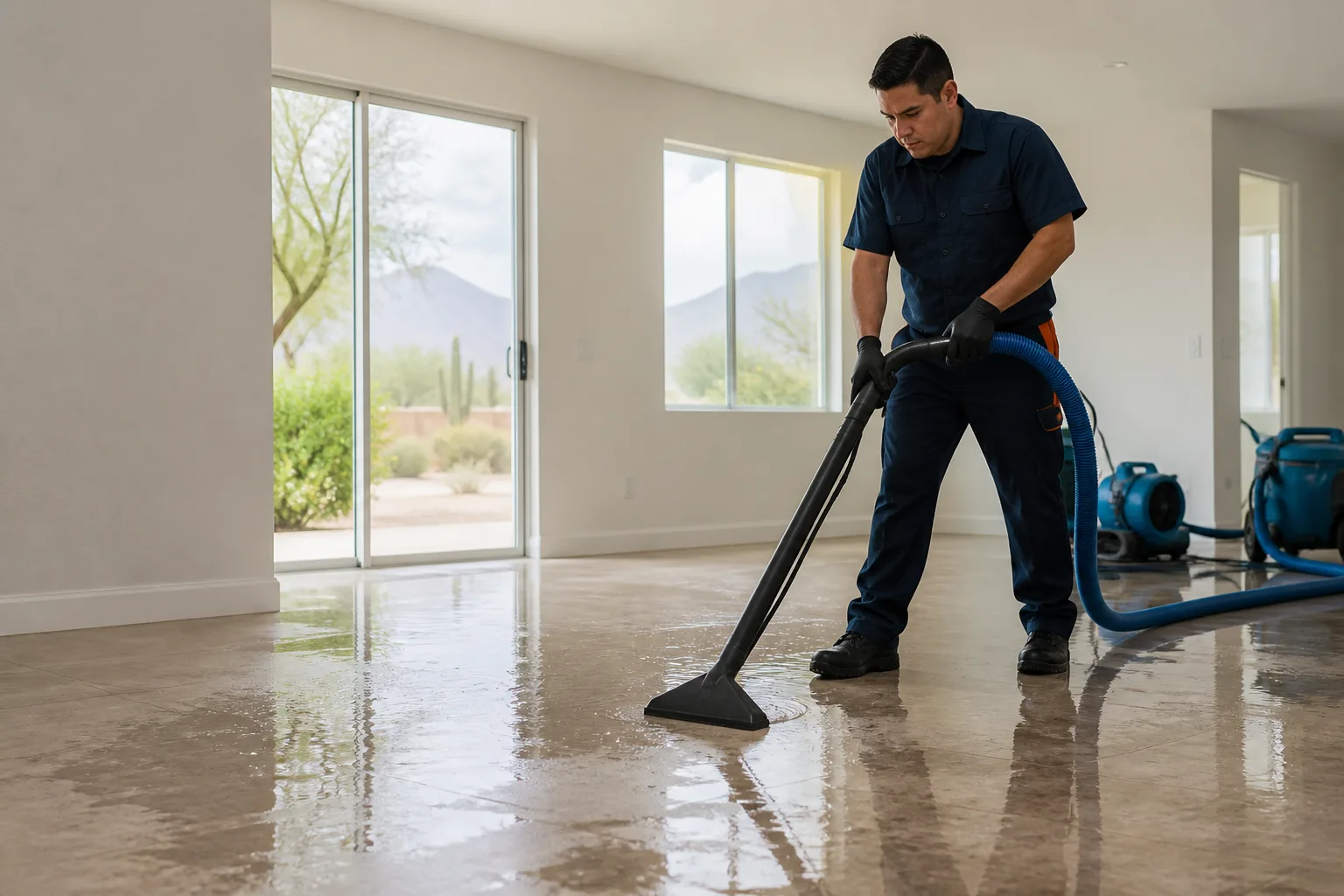
Water Extraction Cost starts with understanding the source, the affected materials and the immediate safety decisions. This guide explains the practical factors that shape the next step. The useful question is not whether water is visible; it is where the water traveled, what it contacted and which decision must happen next.
What is Water Extraction Cost?
Water extraction cost is the price of removing accessible standing water with pumps or vacuum equipment before detailed cleaning and structural drying.
That definition sets the boundary of the topic. Source control, extraction, moisture detection and structural drying are related, but they are not interchangeable. Each answers a different property question.
Key factors that shape the situation
No single observation determines the full scope. These factors carry the most weight:
- Water volume. Depth and spread determine equipment capacity and extraction time.
- Flooring system. Carpet, pad, tile, wood and floating floors require different access methods.
- Contamination. Water condition affects protective controls, disposal and cleaning.
- Access. Stairs, crawl spaces, occupied rooms and fixed contents slow production.
Practical benefits of an organized response
- Reduces the bulk water load quickly.
- Shortens the amount of water that must evaporate during drying.
- Makes affected surfaces accessible for closer inspection.
Extraction vs. Structural drying
The distinction matters because the two approaches answer different questions and can produce very different scopes.
| Factor | Extraction | Structural drying |
|---|---|---|
| Purpose | Remove liquid water | Remove retained moisture |
| Equipment | Pumps and vacuums | Air movers and dehumidifiers |
| Timing | Early in the response | After and alongside extraction |
| Completion | Standing water removed | Materials reach documented goals |
Limitations and disadvantages
Extraction does not make a building dry. Water can remain beneath floors, behind baseboards and inside porous materials. The extraction price also may not include cleaning, demolition, drying equipment or repairs.
What to do: a practical sequence
- Confirm safety and source
Do not begin in an electrically unsafe or contaminated area.
- Identify accessible water
Map rooms, flooring and low points.
- Extract methodically
Use appropriate tools without spreading contamination.
- Measure what remains
Follow with moisture detection and a drying plan.