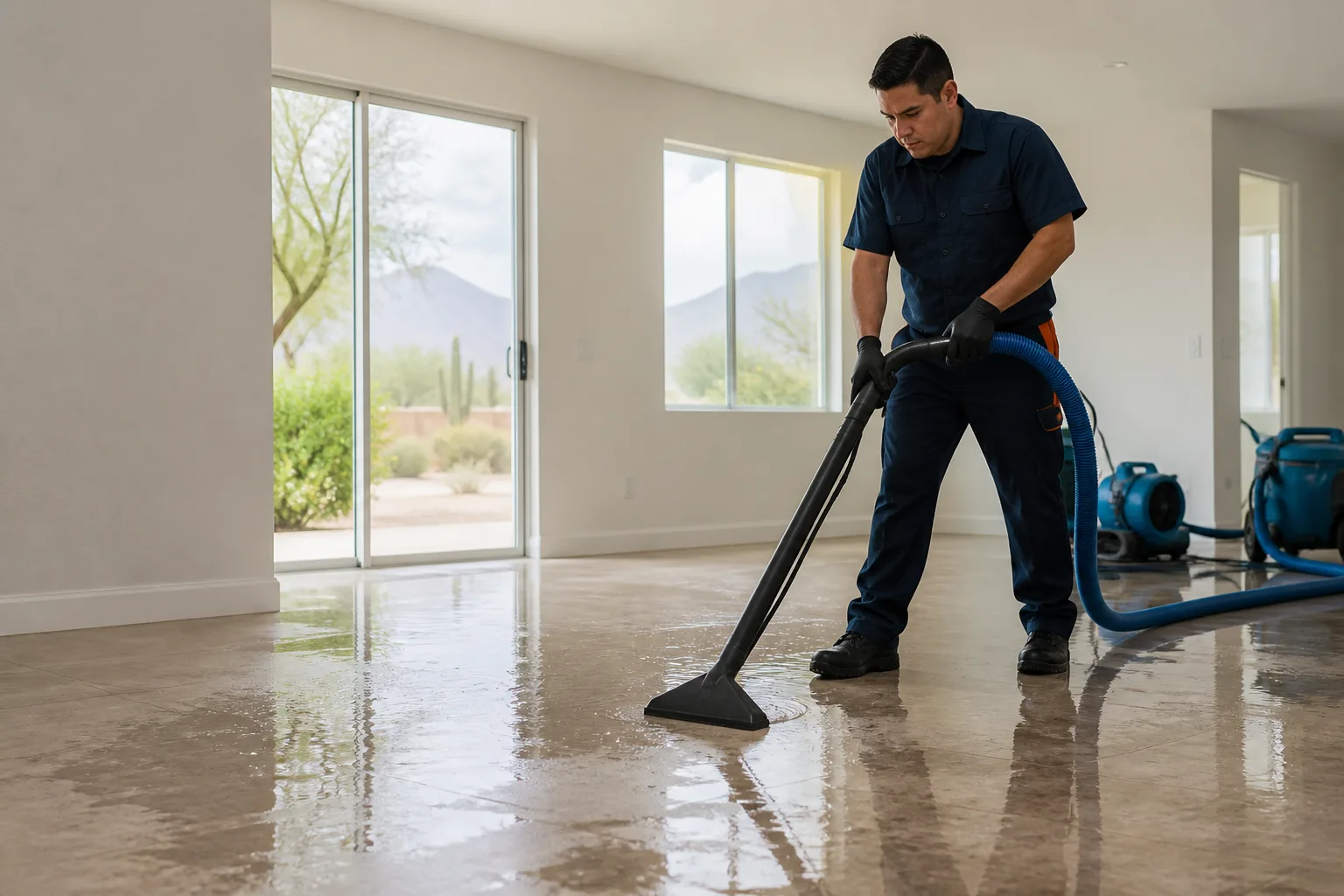
Water Damage Restoration Process starts with understanding the source, the affected materials and the immediate safety decisions. This guide explains the practical factors that shape the next step. The useful question is not whether water is visible; it is where the water traveled, what it contacted and which decision must happen next.
What is Water Damage Restoration Process?
Water damage restoration is the coordinated process of stopping the source, removing water, mapping moisture, drying affected materials, cleaning the work area and preparing the property for necessary repairs.
That definition sets the boundary of the topic. Source control, extraction, moisture detection and structural drying are related, but they are not interchangeable. Each answers a different property question.
Key factors that shape the situation
No single observation determines the full scope. These factors carry the most weight:
- Source control. The leak or intrusion must be stopped before dependable drying can begin.
- Water condition. Clean, used or contaminated water changes handling, cleaning and removal decisions.
- Material response. Drywall, wood, carpet, insulation and masonry retain and release moisture differently.
- Verification. Readings taken over time show whether the drying plan is working.
Practical benefits of an organized response
- Limits avoidable water migration into connected materials.
- Creates a documented path from extraction to repair planning.
- Separates salvageable materials from items that require removal.
Professional restoration vs. Surface cleanup only
The distinction matters because the two approaches answer different questions and can produce very different scopes.
| Factor | Professional restoration | Surface cleanup only |
|---|---|---|
| Scope | Source, water path and materials | Visible water or stain |
| Drying | Measured airflow and humidity control | Fans without documented targets |
| Completion | Moisture readings and condition review | Surface feels dry |
| Safety | Water condition and electrical hazards considered | Risks may be missed |
Limitations and disadvantages
Restoration cannot guarantee that every material will be saved. Contamination, prolonged saturation, delamination and structural deterioration can require removal. Drying also does not repair the original plumbing, roofing or appliance failure.
What to do: a practical sequence
- Make the area safe
Keep occupants away from standing water and possible electrical contact.
- Stop and document the source
Control the release when safe, then record visible conditions.
- Extract and map moisture
Remove bulk water and inspect adjoining assemblies.
- Dry, monitor and verify
Adjust equipment from measured conditions before repair work starts.