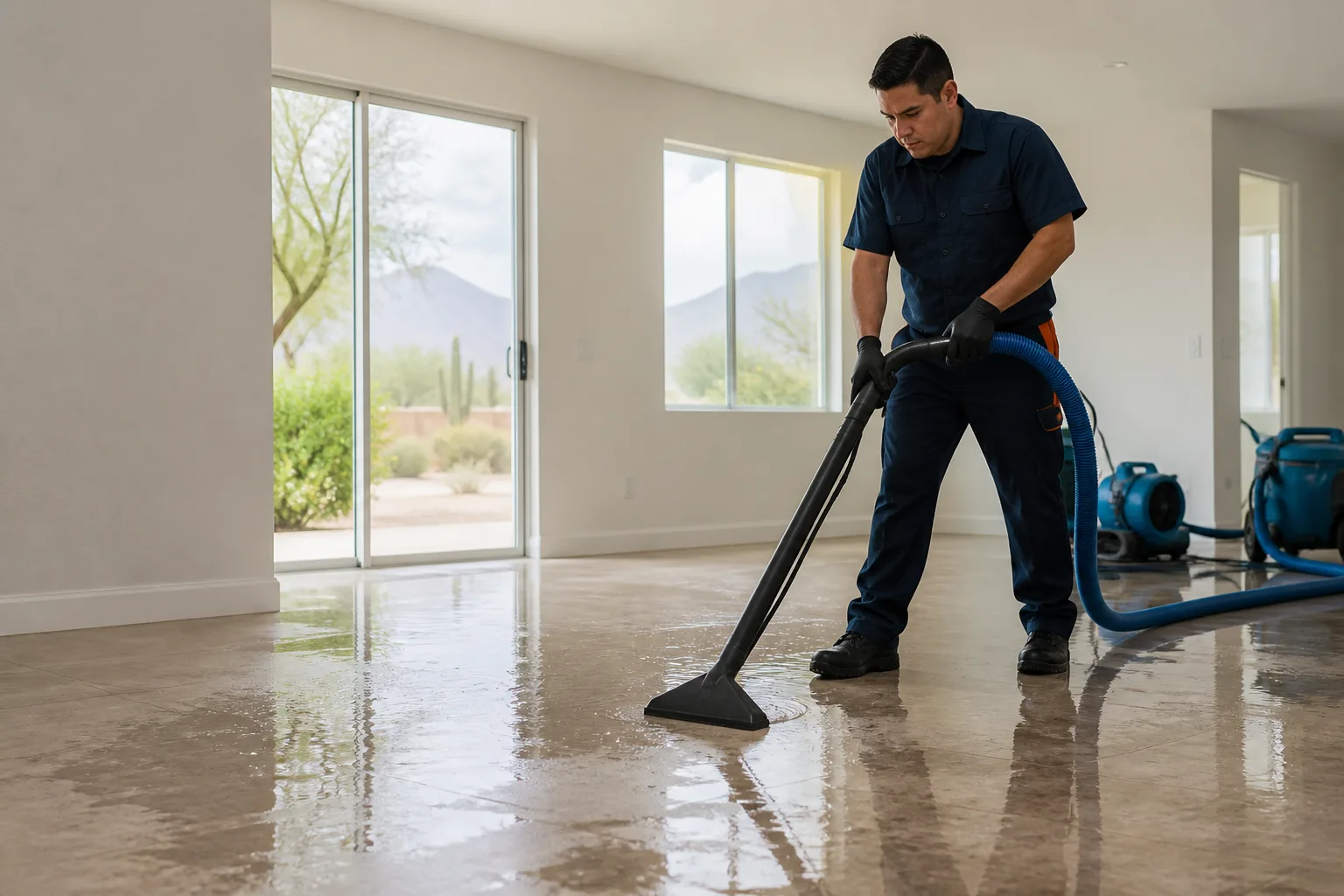
Water Damage Restoration Cost starts with understanding the source, the affected materials and the immediate safety decisions. This guide explains the practical factors that shape the next step. The useful question is not whether water is visible; it is where the water traveled, what it contacted and which decision must happen next.
What is Water Damage Restoration Cost?
Water damage restoration cost is the combined price of assessment, water removal, cleaning, structural drying, material removal and repairs required for a specific loss.
That definition sets the boundary of the topic. Source control, extraction, moisture detection and structural drying are related, but they are not interchangeable. Each answers a different property question.
Key factors that shape the situation
No single observation determines the full scope. These factors carry the most weight:
- Affected area. More rooms and deeper water migration increase labor, equipment and monitoring.
- Water category. Contaminated water requires stricter handling and may reduce material salvage.
- Material type. Hardwood, cabinets, insulation and layered assemblies have different drying or replacement costs.
- Access and duration. Concealed cavities and water left for longer periods can expand the scope.
Practical benefits of an organized response
- A written scope makes line items easier to review.
- Early extraction may reduce continued absorption into porous materials.
- Moisture documentation supports repair and insurance conversations.
Property-specific estimate vs. Online average
The distinction matters because the two approaches answer different questions and can produce very different scopes.
| Factor | Property-specific estimate | Online average |
|---|---|---|
| Inputs | Measured rooms and materials | Broad market assumptions |
| Accuracy | Reflects the actual loss | Useful only as a rough range |
| Contamination | Included in scope decisions | Often omitted |
| Repairs | Can separate mitigation and rebuild | Frequently combined |
Limitations and disadvantages
No single price accurately represents every water loss. Estimates may change when flooring, cabinets or wall cavities reveal additional moisture. Insurance deductibles and covered amounts are separate from contractor pricing.
What to do: a practical sequence
- Record affected rooms
List visible water, stains and damaged contents.
- Request moisture assessment
Confirm how far water traveled beyond visible surfaces.
- Separate work phases
Review mitigation, drying and repair costs independently.
- Compare scope—not totals alone
Check quantities, equipment days, removal and exclusions.