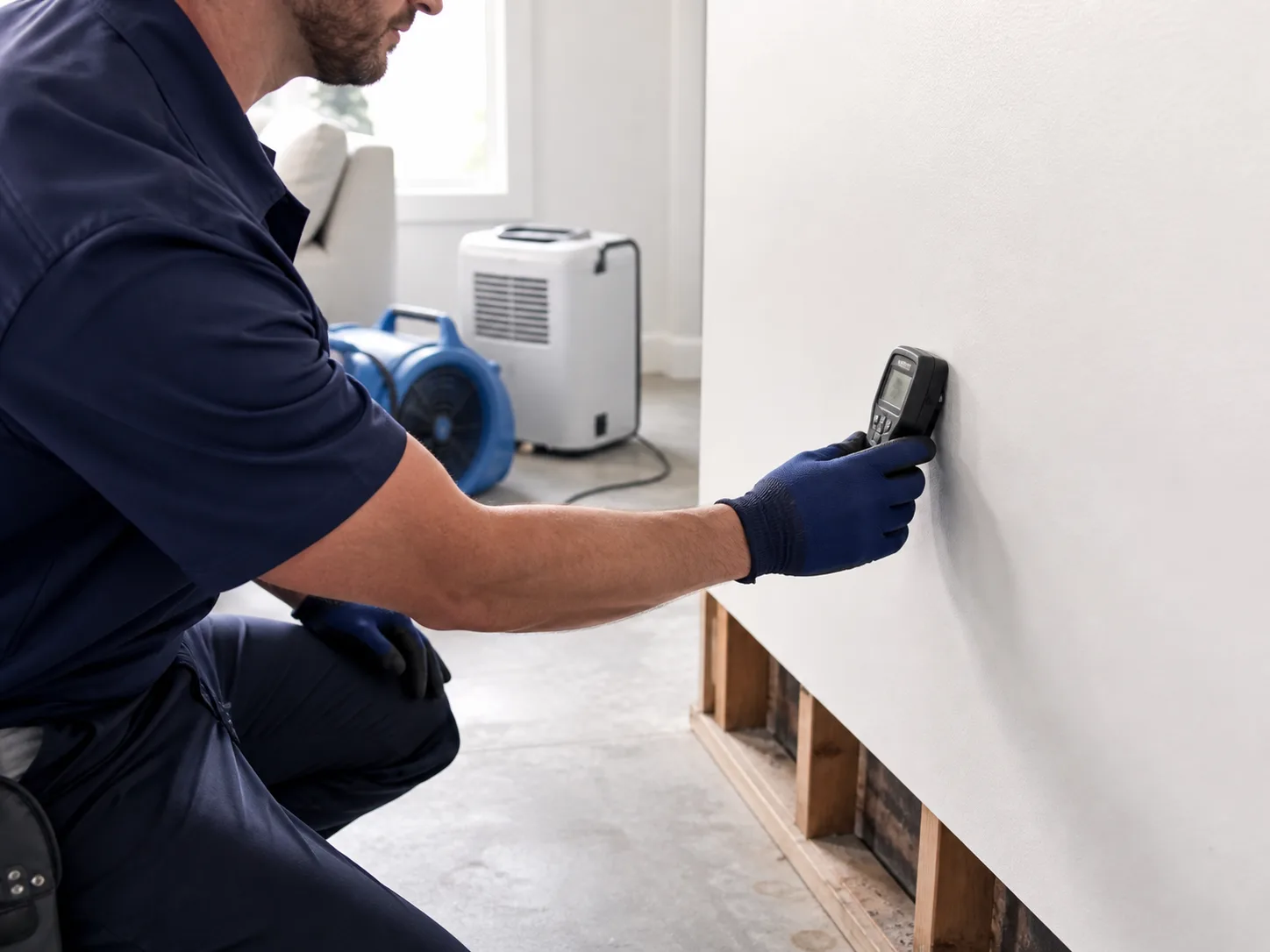
Mold After Water Damage starts with understanding the source, the affected materials and the immediate safety decisions. This guide explains the practical factors that shape the next step. The useful question is not whether water is visible; it is where the water traveled, what it contacted and which decision must happen next.
What is Mold After Water Damage?
Mold after water damage is microbial growth supported by persistent moisture, suitable temperature and organic material; controlling the water source and drying the assembly are central to prevention.
That definition sets the boundary of the topic. Source control, extraction, moisture detection and structural drying are related, but they are not interchangeable. Each answers a different property question.
Key factors that shape the situation
No single observation determines the full scope. These factors carry the most weight:
- Moisture duration. Longer wetting gives spores more opportunity to establish growth.
- Hidden reservoirs. Wall cavities, insulation and flooring layers can stay damp after surfaces dry.
- Material condition. Porous materials with visible growth may require controlled removal.
- Humidity. High indoor humidity slows evaporation and can support damp conditions.
Practical benefits of an organized response
- Prompt source control removes the condition feeding growth.
- Moisture mapping finds reservoirs that routine cleaning can miss.
- Containment decisions reduce unnecessary disturbance of affected material.
Moisture control vs. Surface treatment alone
The distinction matters because the two approaches answer different questions and can produce very different scopes.
| Factor | Moisture control | Surface treatment alone |
|---|---|---|
| Target | Source and damp materials | Visible discoloration |
| Measurement | Moisture and humidity | Appearance |
| Hidden areas | Investigated as needed | Usually untouched |
| Outcome | Addresses growth conditions | May leave moisture in place |
Limitations and disadvantages
Drying does not remove established growth, and a sprayed product does not correct the moisture source. Health concerns should be discussed with a qualified medical professional, not diagnosed by a restoration website.
What to do: a practical sequence
- Stop the water source
Correct the leak or intrusion first.
- Avoid disturbing growth
Do not spread dust from suspect materials.
- Map moisture
Check concealed and adjacent assemblies.
- Set a controlled scope
Coordinate drying, removal and cleaning based on actual conditions.